



NEWS&EVENTS
Home > News&Events > Company news > A Key Stage in Pyrometallurgical Copper Refining: Converter Blowing
In the process of copper smelting, converter blowing serves as the core operation for further purifying matte into blister copper. Matte consists primarily of Cu₂S and FeS, with a typical copper content ranging between 40% and 60%; the specific objective of the converter is to utilize oxidation reactions to blow-refine this material into blister copper containing approximately 98.5% copper, thereby providing suitable anodes for subsequent electrolytic refining.
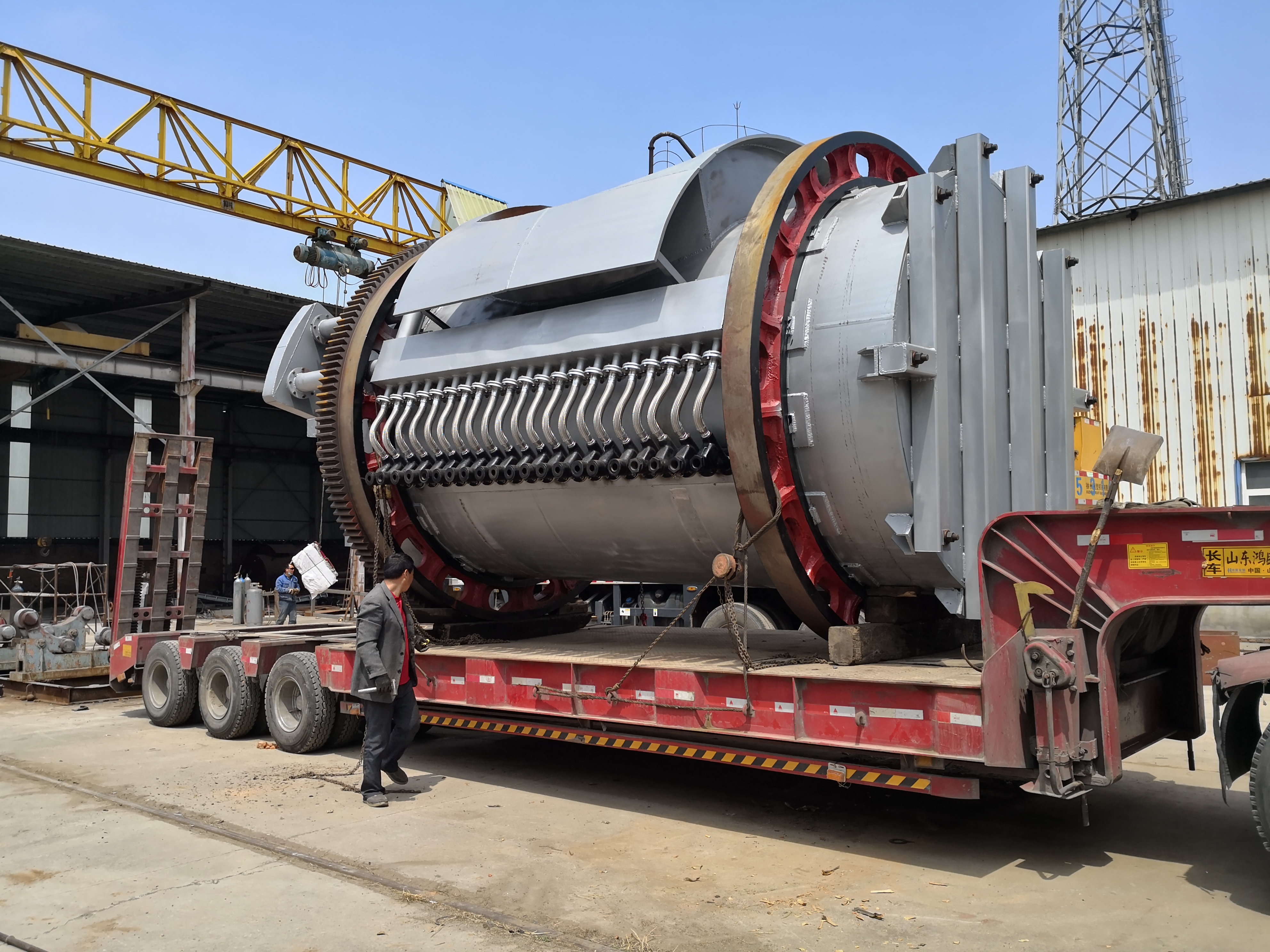
The blowing process is divided into two distinct stages. The first stage focuses primarily on iron removal: air or oxygen-enriched air is blown into the molten matte, causing the FeS to undergo preferential oxidation to form FeO. This FeO subsequently reacts with added quartz flux to generate an iron silicate slag (2FeO·SiO₂). The iron, now in the form of slag, floats atop the molten bath and is periodically tapped off, thereby effectively separating it from the copper system. The second stage constitutes the desulfurization process: the remaining Cu₂S continues to oxidize, generating Cu₂O which then reacts with the remaining Cu₂S to ultimately yield metallic copper. Simultaneously, the sulfur is converted into sulfur dioxide (SO₂) gas, which enters the flue gas system; this flue gas stream is typically captured and utilized for the production of sulfuric acid, thereby mitigating environmental pollution.
As for precious metals such as gold and silver, they exhibit a strong affinity for copper. During the blowing process, these precious metals do not participate in the oxidation reactions; instead, they are reduced to their metallic state alongside the copper melt, ultimately becoming concentrated within the blister copper. This implies that converter blowing serves not only to purify the copper but also acts as a preliminary enrichment process for precious metals, thereby creating favorable conditions for the subsequent recovery of gold, silver, and other valuables from the anode slime.
In summary, converter blowing achieves both the efficient purification of copper and the enrichment of precious metals by precisely controlling oxidation reactions—specifically by channeling iron into the slag, converting sulfur into flue gas, and retaining the precious metals within the blister copper. It stands as a pivotal and transitional link within the overall pyrometallurgical copper smelting chain.