



NEWS&EVENTS
Home > News&Events > Company news > Corrosion Protection Measures for Precious Metal Extraction Equipment
The extraction of precious metals within highly corrosive media—such as hydrochloric acid, nitric acid, and high-concentration chloride salts—imposes extremely stringent requirements on the material selection and structural design of extraction equipment. To ensure the long-term, stable operation of the equipment and to achieve the objectives of zero leakage and zero emulsification, a comprehensive approach focusing on three key aspects is essential: material selection, sealing structures, and flow field optimization.
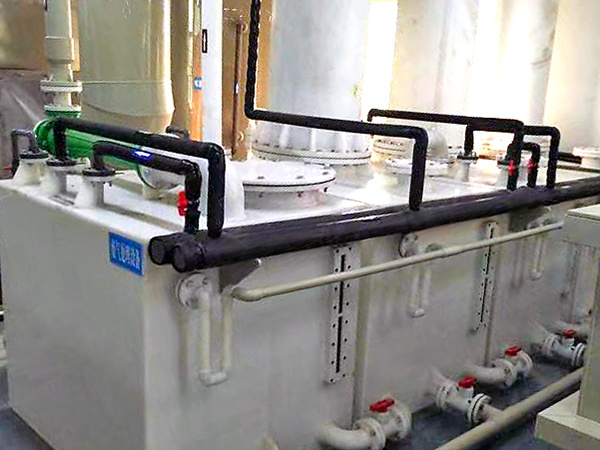
First, regarding material design, all components of the equipment that come into contact with the process fluids are fabricated from materials specifically selected for their corrosion resistance. For high-temperature, high-chloride environments, pure titanium and 316L stainless steel are selected; the former resists chloride ion corrosion through the formation of a dense passive oxide film, while the latter is well-suited for most acidic operating conditions due to its excellent overall corrosion resistance. For applications involving strong acidic media, non-metallic materials—such as PPH, PVC, and fluoroplastics—are employed; these materials possess exceptional chemical inertness, enabling them to effectively withstand long-term corrosion by nitric and hydrochloric acids.
Second, to prevent leakage, the equipment features a fully enclosed design. All critical connection points—including flanges, interfaces, and rotating components—are fitted with specialized sealing mechanisms, such as double-ring seals or mechanical seals, to ensure leak-free operation even under conditions of fluctuating pressure or varying temperature.
To address issues related to emulsification and entrainment, the equipment optimizes the internal geometry of the extraction unit's flow channels. By avoiding localized intense turbulence and excessive shear forces, the formation of emulsions is inhibited at the source. Concurrently, the inclusion of a sufficiently large clarification chamber—combined with a judicious baffle design—extends the phase separation time, ensuring a distinct stratification between the organic and aqueous phases. This approach significantly reduces solvent entrainment and minimizes extractant loss, thereby guaranteeing the long-term stability and economic efficiency of the operation.
In summary, the synergistic combination of scientifically selected materials, rigorously engineered sealing structures, and meticulously designed flow fields serves as the fundamental guarantee for the reliable operation of precious metal extraction equipment within highly corrosive chemical systems.