



NEWS&EVENTS
Home > News&Events > Company news > Antimony Volatilization Smelting Rotary Furnace — Temperature-Adjustable + Hydraulic Slag Discharge
During the volatilization smelting of antimony ores or slags, common dilemmas faced by many antimony smelters include insufficient furnace temperatures, delayed slag tapping, and the rapid corrosion of furnace linings by arsenic and sulfur. If the temperature drops below 1300°C, the volatilization rate decreases significantly; conversely, if slag tapping takes longer than 5 minutes, the molten bath inside the furnace cools down, thereby prolonging the cycle time for the subsequent batch.
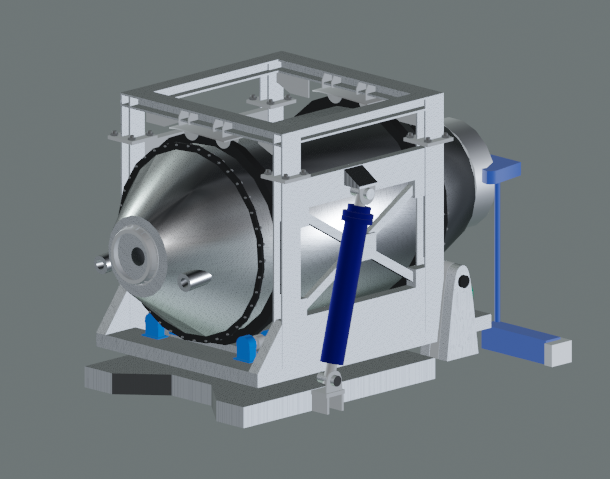
To address the unique process requirements of antimony smelting, we have introduced a natural gas-fired rotary furnace. Featuring a maximum operating temperature of 1650°C, a hydraulic lifting mechanism for slag tapping, and a composite lining constructed from premium-grade high-alumina bricks—this furnace is specifically engineered for the volatilization, oxidation, and periodic slag removal processes involved in antimony production.
Core Configuration: Three Key Technologies for Antimony Volatilization Smelting
1. High-Temperature Capability: Adjustable Range of 1100–1650°C
Antimony volatilization smelting is typically conducted within the 1200–1400°C range. This furnace allows for precise temperature control between 1100°C and 1650°C. The lower temperature range is utilized for furnace drying or processing low-grade materials, while the higher range ensures complete antimony volatilization, thereby reducing the residual antimony content in the final slag to minimal levels.
2. Rapid Hydraulic Slag Tapping: Lift/Lower Time < 2 Minutes
Equipped with a dedicated hydraulic station featuring a cylinder stroke of Φ160/100–1700 mm, the furnace body can be raised in 1 minute and 10 seconds, and lowered in 50–55 seconds. At the conclusion of each batch, the molten slag is rapidly poured out through the furnace mouth, thereby minimizing heat loss from the molten bath and significantly enhancing operational efficiency per batch.
3. Corrosion-Resistant Furnace Lining: Premium High-Alumina Bricks + 100mm Insulation Layer
Antimony concentrates and reducing agents often contain sulfur, arsenic, and other elements that exert corrosive effects on both basic and acidic slags. The premium-grade high-alumina bricks utilized in this lining feature a high load-softening temperature and exceptional resistance to chemical corrosion. When combined with a 100mm insulation/castable layer, this composite structure not only extends the service life of the furnace lining but also effectively reduces the surface temperature of the furnace shell.
Process Suitability:
Furnace Feed Materials: Antimony concentrates (antimony sulfide) or secondary antimony-bearing resources, blended with reducing coal and fluxing agents. Operation Mode: The furnace body rotates (at 2 r/min) to ensure uniform heating of the material; antimony trioxide fumes generated during volatilization are directed into the dust collection system; and molten slag is periodically discharged by tilting the furnace body via a hydraulic station.
Fuel: Natural gas—characterized by a stable calorific value and rapid temperature response—facilitating precise automatic temperature control.
Are you currently seeking a rotary furnace for antimony volatilization smelting that offers high-temperature resistance, rapid slag discharge, and stable operation?
👉 Contact us to receive a detailed technical proposal and recommendations for furnace lining optimization; alternatively, send us the composition of your antimony material, and we will calculate the optimal furnace chamber volume and burner power requirements for your specific needs.