



NEWS&EVENTS
In the smelting of antimony, electrolytic refining serves as a critical process for enhancing purity and eliminating impurities. Modern electrolytic equipment centers around the diaphragm electrolytic cell, complemented by intelligent auxiliary systems, to form a comprehensive operational chain that is both highly efficient and environmentally friendly.
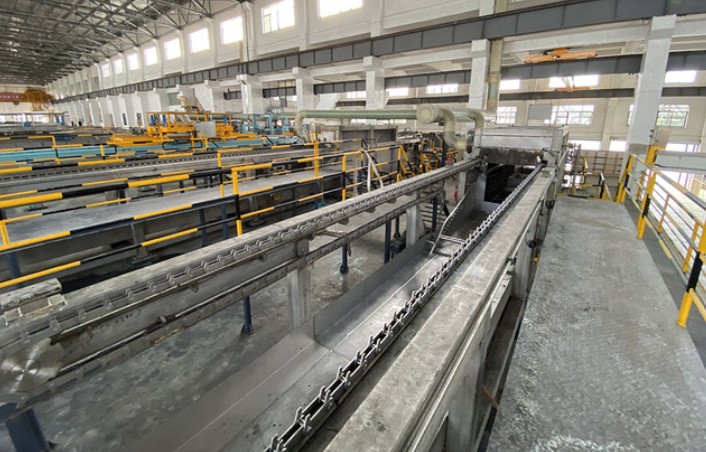
I. Diaphragm Electrolytic Cell (Core of the Process): The cell body is constructed from corrosion-resistant materials and externally reinforced with a 316 stainless steel framework; it withstands strong acids and high temperatures, ensuring leak-free and deformation-free operation over extended periods. The diaphragm effectively separates the anode and cathode compartments, preventing the back-migration of impurities and guaranteeing the purity of the antimony deposited at the cathode.
II. Electrode System: The anodes utilize titanium-substrate coatings or high-strength graphite electrodes, offering superior corrosion resistance and high electrical conductivity to prevent iron impurities from contaminating the electrolyte. The cathodes are selected from stainless steel or titanium plates featuring smooth surfaces, which facilitate the easy stripping of deposited antimony and thereby reduce labor intensity.
III. Rectification and Power Supply System: Equipped with thyristor-controlled rectification units, the system delivers high-amperage DC power exceeding 5000A. It supports constant-current control and overload protection, boasts high energy conversion efficiency, and fully meets the power demands of continuous production operations.
IV. Automatic Stripping and Post-Processing System: This system integrates hydraulic/pneumatic-driven automatic stripping devices with washing, drying, and pyrometallurgical ingot-casting units. It automates the entire workflow—from the removal of deposits from the cell to the production of finished antimony ingots—significantly boosting operational efficiency and product consistency.
V. Electrolyte Circulation and Purification System: Employing a combination of processes—including chemical precipitation, ion exchange, and membrane separation—this system thoroughly removes impurities such as copper, iron, and lead. The electrolyte can be recycled and reused, thereby minimizing wastewater discharge and reducing operational costs, in full compliance with clean production standards.
In summary, this equipment centers on the diaphragm electrolytic cell, integrating high-performance electrodes, high-power rectification, automatic stripping, and electrolyte purification systems to ensure efficient, stable, and clean operations. It represents the ideal choice for modern antimony smelting facilities.