



NEWS&EVENTS
Home > News&Events > Company news > Key Considerations for Equipment Selection in Anode Plate Production Lines
Amidst the current wave of capacity expansion in the copper smelting industry, the construction of new anode casting workshops must strictly adhere to three core principles: "High Efficiency, Precision, and Low Consumption." The following outlines key equipment selection considerations across four major process sections:
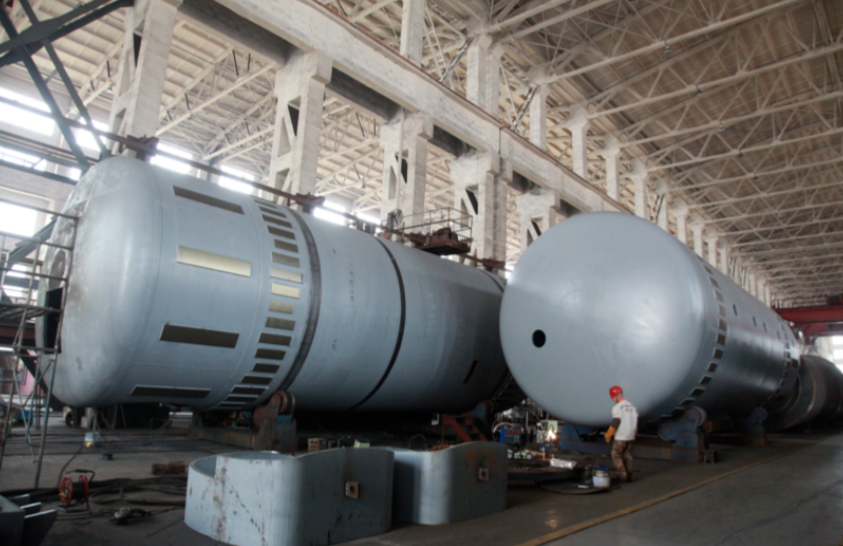
Section 1: Refining & Melting — Rotary Anode Furnace
The furnace capacity must be strictly matched to the rhythm of the upstream molten copper supply to avoid bottlenecks or excess inventory. For refractory linings, priority should be given to bricks exhibiting high resistance to slag corrosion and excellent thermal shock stability. For the combustion system, the use of regenerative burners or oxygen-enriched combustion technology is recommended to significantly reduce specific energy consumption.
Section 2: Casting & Forming — Rotary Anode Casting Machine
The diameter of the rotary table determines the layout of the casting stations and the available cooling time; typically, a diameter of 4 to 6 meters represents the most economically viable range. The capacity of the casting ladle must be matched to the weight of a single anode plate, with a critical focus on quantitative casting precision (targeting an accuracy within ±1 kg), as this directly impacts the current efficiency of the subsequent electrolytic refining process. The automated spraying and demolding mechanisms must be highly responsive to prevent sticking and minimize the generation of defective products.
Section 3: Cooling & Shaping — Cooling Tank + Leveling Machine + Lug Correction Machine + Stacking & Bundling Machine
The cooling water system should be designed as a closed-loop circuit to ensure stable water temperature and flow rates, thereby preventing thermal cracking in the anode plates. The leveling and lug correction processes are essential for ensuring the flatness of the plates and the dimensional accuracy of the lifting lugs. The stacking machine should be equipped with laser or mechanical alignment capabilities to ensure neat, uniform stacks that facilitate efficient logistics and transportation.
Section 4: Environmental Protection — Baghouse Dust Collector + Water Recirculation System
High-efficiency baghouse dust collectors must be installed at the furnace front and casting stations to effectively control particulate matter emissions. A comprehensive water recirculation system should be implemented throughout the plant for both production and cooling processes to achieve zero liquid discharge or minimize water replenishment requirements.
Are you currently planning a new anode casting plant? Contact us to receive a comprehensive "Complete Plant Equipment Configuration Proposal" and 3D layout diagrams.