



NEWS&EVENTS
Home > News&Events > Company news > Common Equipment Faults and Process Preventive Measures for Antimony Rotary Furnace
In pyrometallurgy, the rotary furnace serves the critical functions of roasting and reduction; its most common operational failures involve internal ring formation and refractory lining erosion, issues that directly impact operational efficiency, furnace service life, and product quality.
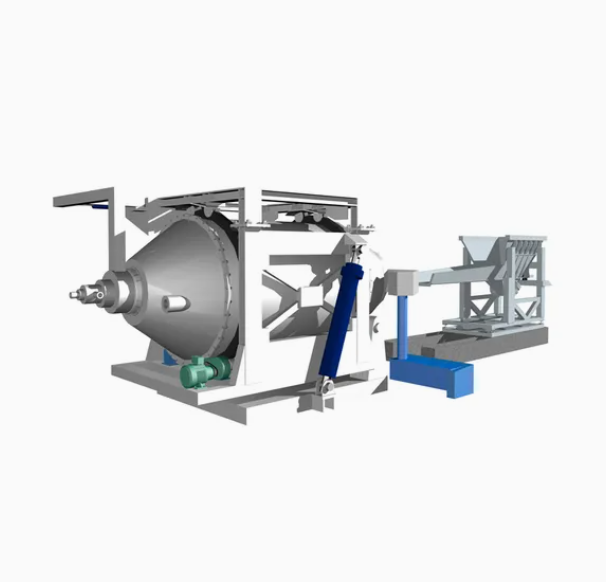
Internal ring formation refers to the development of hard, annular accretions at the interface between the melting and reaction zones. The root cause lies in an excessive concentration of low-melting-point components—such as SiO₂ and iron-antimony compounds—within the furnace feed; during temperature fluctuations, semi-molten materials adhere to the refractory lining and gradually accumulate to form these rings. Preventive measures include: strictly controlling the SiO₂-to-FeO ratio in the mineral feed; maintaining stable temperature control to avoid frequent heating and cooling cycles; and periodically adjusting the furnace 's rotational speed and inclination angle to enhance material tumbling and minimize material stagnation and adhesion.
Refractory lining erosion manifests primarily through chemical dissolution by high-temperature melts and cracking induced by thermal shock. Molten antimony and alkaline slags exert significant corrosive effects on standard refractory materials, while excessively rapid heating rates can trigger thermal stress cracks. Preventive measures include: selecting high-alumina or magnesia-chrome bricks to ensure chemical compatibility with the process environment; strictly adhering to the prescribed furnace drying curve to control the heating rate; maintaining a uniform temperature within the molten bath to prevent localized hot spots that exacerbate erosion; and promptly repairing any exposed sections of the refractory lining following slag and antimony tapping operations.
Both categories of operational failures are closely linked to raw material characteristics, temperature control regimes, and operational protocols. By optimizing the quality of the furnace feed, maintaining stable temperature control, rationally adjusting operational parameters, and implementing robust maintenance practices, it is possible to significantly reduce the failure rate and extend the continuous operating cycle of the antimony rotary furnace .