



NEWS&EVENTS
Home > News&Events > Company news > How do you select the right antimony rotary furnace based on production requirements?
Selecting the appropriate antimony rotary furnace requires a comprehensive assessment based on three core factors—ore characteristics, target products, and production scale—alongside customized solutions provided by professional manufacturers.
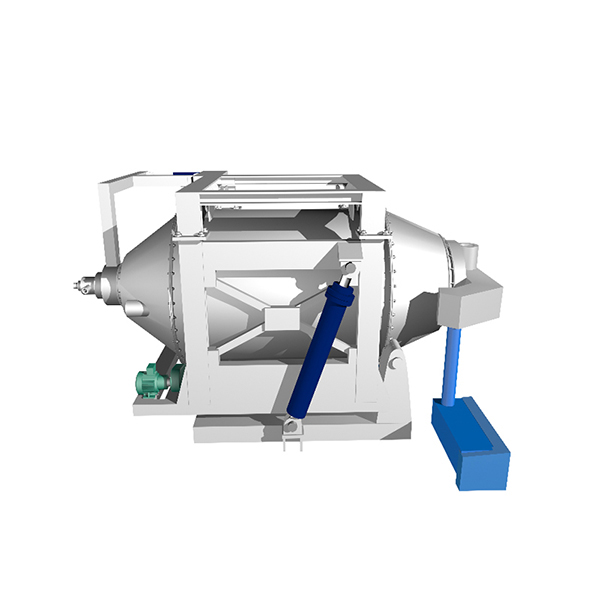
Ore characteristics dictate fundamental parameters. High-grade lump ore requires a furnace capable of withstanding thermal shock and offering ample internal volume; a lower rotation speed is advisable to ensure thorough smelting. Conversely, low-grade powdery or associated ores require enhanced lining designs to prevent ring formation, as well as higher rotation speeds to improve material turnover and heat transfer, thereby avoiding sintering. Neglecting these ore-specific differences can lead to reduced smelting efficiency and increased energy consumption.
Target products determine the process focus. When producing antimony ingots, equipment selection prioritizes temperature uniformity and the efficiency of slag-antimony separation, necessitating precise temperature control and effective slag discharge mechanisms. In contrast, producing antimony trioxide focuses on regulating the temperature gradient and oxygen supply intensity during the oxidation-volatilization stage; in this context, the rotary furnace effectively functions as a volatilization-oxidation reactor.
Production scale defines the equipment specifications. There are significant differences in furnace dimensions, drive power, and cooling systems between thousand-ton and ten-thousand-ton scale projects. Large-scale production requires integration with automated loading, metered feeding, and efficient slag discharge systems, while also considering waste heat recovery compatibility to balance environmental protection with energy efficiency.
Precise customization is the key to equipment selection. Standard products struggle to accommodate the widely varying mineralogical parameters involved. It is recommended that, prior to selection, ore samples be sent to a manufacturer with testing capabilities to conduct small-scale roasting trials; this ensures the acquisition of critical design data for the rotary furnace , thereby guaranteeing efficient, low-consumption, and clean operation after commissioning, while maximizing long-term economic benefits.