



NEWS&EVENTS
Home > News&Events > Company news > What is the process position of the rotary furnace within the overall antimony smelting workflow?
The rotary furnace serves as a pivotal link in the antimony smelting process, acting as the critical stage that bridges the transformation from raw ore to refined antimony or antimony trioxide.
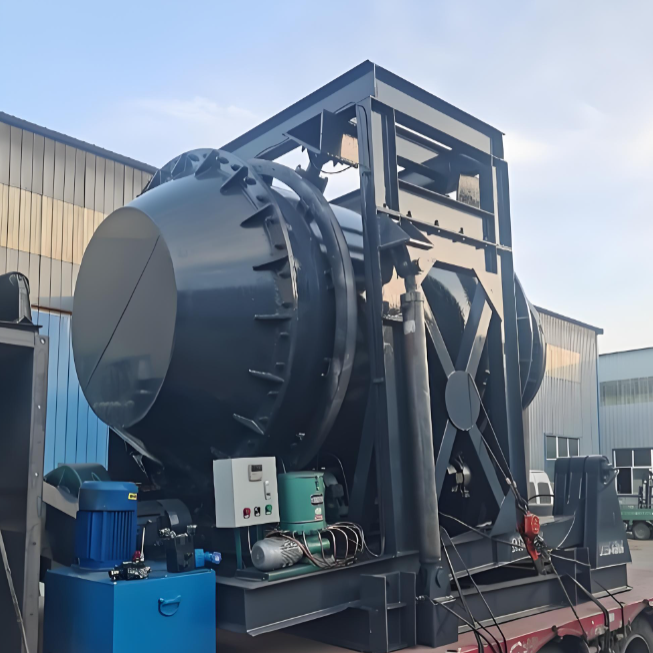
At the feed end, it receives desulfurized and roasted antimony ore powder, facilitating the reduction and enrichment of antimony within a sealed, high-temperature, dynamic environment to achieve a fundamental phase transformation. Its operational efficiency and stability directly determine whether downstream refining processes can obtain high-quality intermediate products.
At the discharge end, it connects to two major systems: on one hand, it channels volatile flue gas rich in antimony oxides to the gas treatment system, serving as a vital source for antimony trioxide recovery; on the other, it produces crude antimony alloy or high-grade antimony oxide—serving as feedstock for refining—thereby laying the foundation for the final production of refined antimony or antimony white.
The rotary furnace is not merely a platform for the precise control of heat and atmosphere, but also a critical site for impurity separation and the targeted concentration of valuable metals. Its technical sophistication and operational precision are often regarded as key indicators of an enterprise's process maturity; indeed, this core equipment enables the efficient conversion of low-grade antimony ore into high-value-added products, underpinning the economic value and strategic significance of the entire industry chain.