



NEWS&EVENTS
Home > News&Events > Company news > How can the current efficiency of copper electrolytic cells be improved?
The key to improving current efficiency in copper electrolytic cells lies in refined management and control; the primary measures can be summarized as follows:
Strengthen cell-top management and standardize operations. Strictly enforce standards for loading anodes and cathodes into the cells, ensuring electrodes are vertical, evenly spaced, and centered to minimize the risk of short circuits at the source. Enhance operator training to ensure they can accurately identify and address early-stage anomalies—such as anode "bridges" or warped plates—thereby preventing issues from escalating.
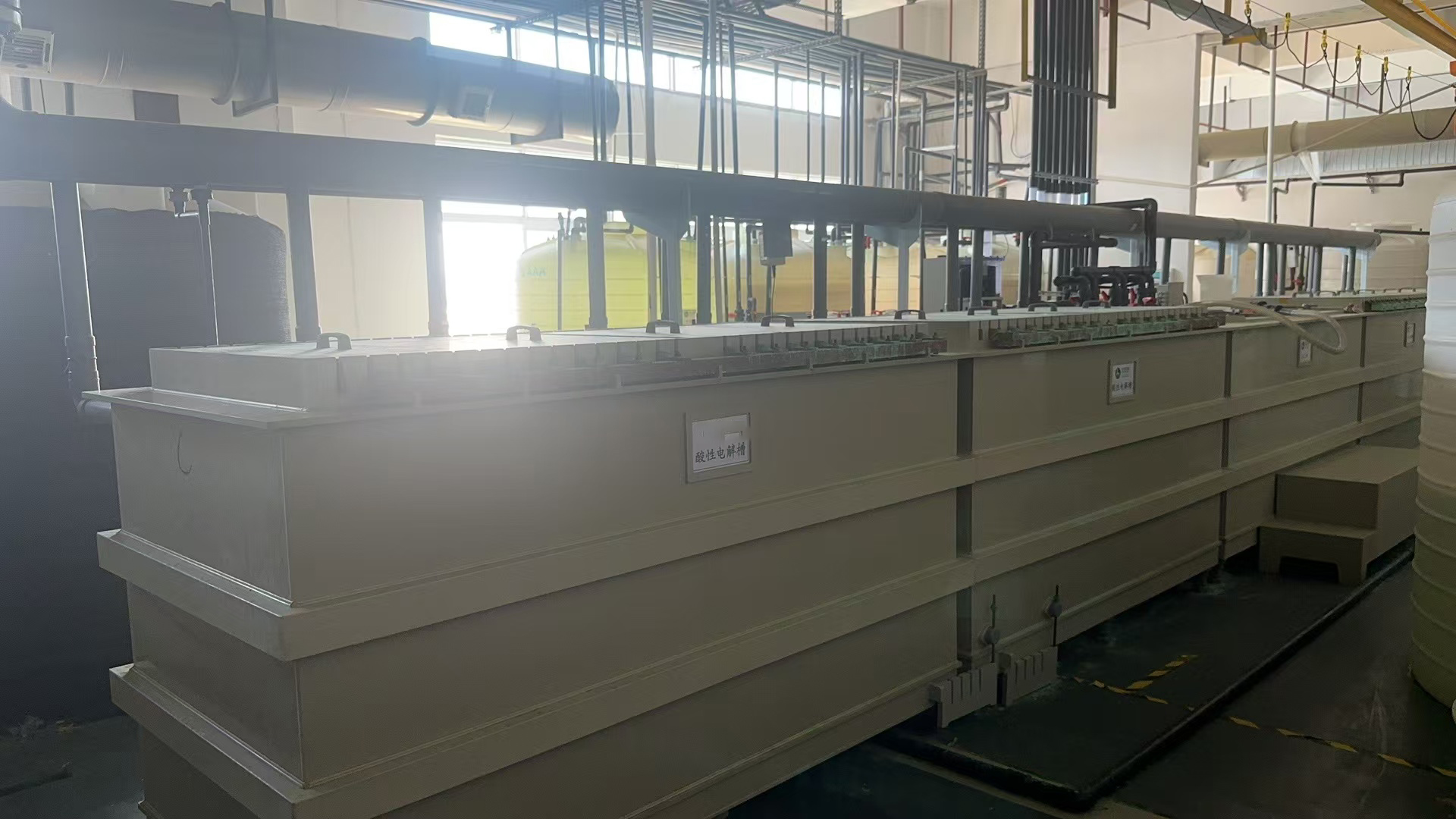
Optimize process parameters and control. Precisely regulate electrolyte circulation flow and cell liquid levels to maintain stable concentration and temperature gradients, preventing localized short circuits caused by anode bridging. After energization, inspect cathode plates individually to promptly detect and address any failure to deposit copper, while also increasing the frequency of cell-top inspections.
Implement anomaly handling and equipment maintenance protocols. Regularly check for detached edge strips or deformed cathode plates, replacing or repairing them immediately upon detection. Establish short-circuit early warning and rapid response mechanisms—utilizing tools such as infrared thermography to aid diagnosis—to minimize losses associated with short circuits.
Through the aforementioned systematic improvements—encompassing end-to-end optimization from electrode hanging and parameter regulation to process monitoring—electrical energy losses and unplanned downtime can be significantly reduced; this leads to a marked increase in the current efficiency of copper electrolytic cells, while simultaneously improving cathode copper quality and enhancing production cost control.