



NEWS&EVENTS
Home > News&Events > Company news > What is the purpose of electrolyte circulation in copper electrolytic cells?
The fundamental purpose of electrolyte circulation in copper electrolytic refining is to establish a uniform, stable, and pure electrochemical reaction environment, thereby ensuring cathode copper quality and current efficiency. Its core functions are as follows:
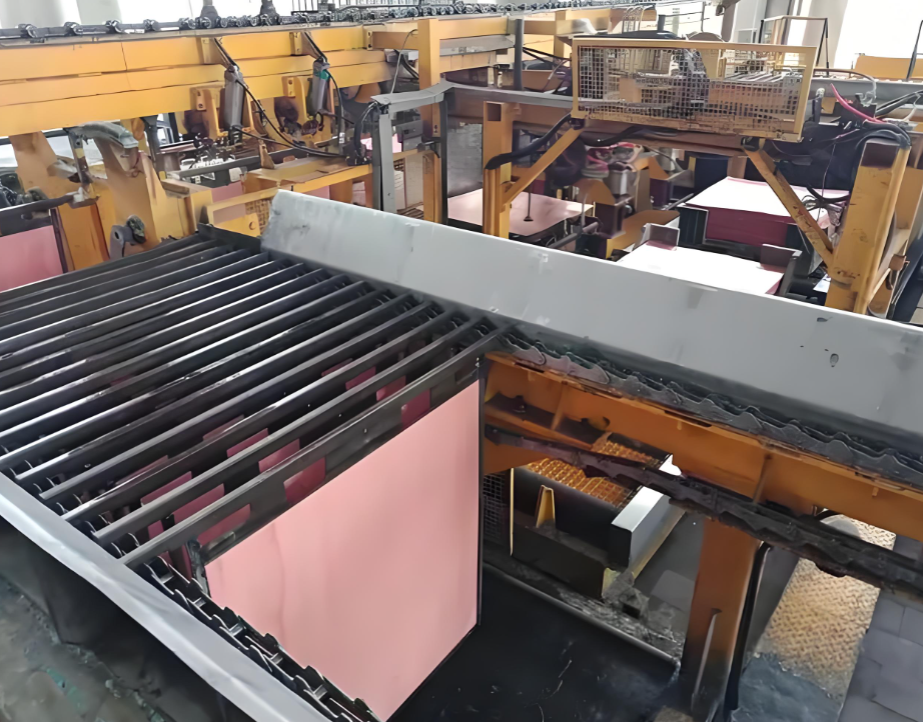
1. Eliminating concentration polarization. Under static conditions, copper ions settle due to gravity, leading to insufficient concentration at the cathode surface and triggering the co-deposition of impurities. Forced circulation utilizes convective diffusion to ensure a constant supply of copper ions near the cathode, resulting in uniform deposition rates and preventing the formation of loose, powdery deposits.
2. Balancing the temperature field. In a static state, the temperature difference between the top and bottom of the cell can reach several degrees Celsius. Circulation facilitates rapid heat redistribution, keeping the overall temperature variation within ±1°C; this ensures dense crystal formation while simultaneously lowering cell voltage and conserving electrical energy.
3. Removing suspended matter. The circulation system continuously transports suspended impurities—such as anode slime and additive decomposition products—out of the cell for filtration, preventing their inclusion in the cathode; this is a prerequisite for producing high-purity copper.
4. Optimizing flow field dynamics. A "bottom-in, top-out" flow pattern facilitates anode slime settling, while "parallel flow" enhances ion replenishment to accommodate high current densities.
In summary, electrolyte circulation in copper electrolytic cells serves as an integrated control mechanism linking chemistry, thermal engineering, and fluid dynamics, providing the fundamental basis for achieving efficient and stable production.