



NEWS&EVENTS
Home > News&Events > Company news > What are the key technologies involved in the manufacturing of antimony rotary furnaces?
As the core thermal equipment in the pyrometallurgical smelting of antimony, the manufacturing quality of the rotary furnace directly determines metal recovery rates, energy consumption per ton of antimony, and exhaust emission levels. Constructing a high-performance antimony rotary furnace involves far more than simple shell welding; it requires overcoming four major technical challenges: furnace lining, sealing, drive systems, and combustion. The key manufacturing aspects are outlined below:
These primarily cover four areas:
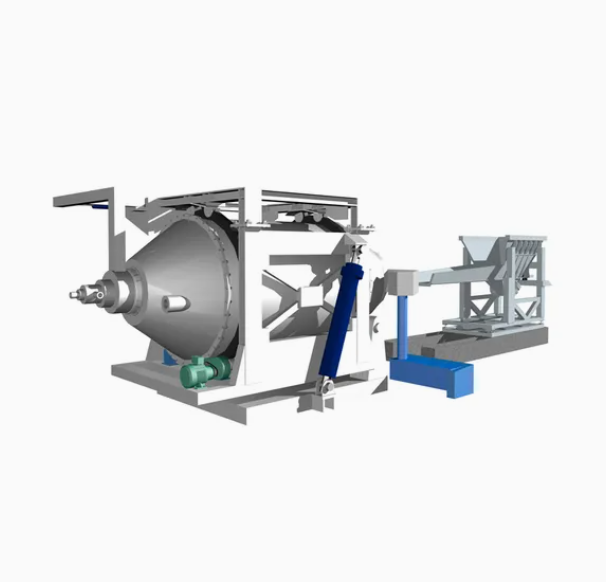
Refractory material selection and lining installation: Selecting materials with high thermal shock resistance and corrosion resistance, while optimizing the lining installation process;
Furnace sealing technology: Employing labyrinth seals or graphite sealing rings to prevent flue gas leakage;
Drive and support system design: Optimizing support structures via finite element analysis and utilizing variable-frequency drives for the transmission system;
Combustion system optimization: Implementing oxygen-enriched combustion technology to enhance efficiency and reduce energy consumption.
In summary, the manufacture of an antimony rotary furnace is not merely an assembly of individual components, but rather a process of deeply integrating refractory materials, sealing structures, drive mechanisms, and combustion systems. Each technology requires a design tailored to the specific demands of antimony smelting. Only through the organic integration of these key processes can a furnace be produced that offers a long service life, low energy consumption, and superior environmental performance—thereby laying a solid foundation for quality improvement and efficiency gains across the entire antimony industry chain.