



NEWS&EVENTS
Home > News&Events > Company news > What are the main types of rectangular melting furnaces for scrap copper?
In the fields of scrap copper recycling and copper alloy smelting, rectangular melting furnaces are widely used due to their compact design and ease of operation. Based on heating principles and functional differences, they are primarily categorized into three types: rectangular reverberatory furnaces, tilting rectangular furnaces, and medium-frequency induction rectangular furnaces.
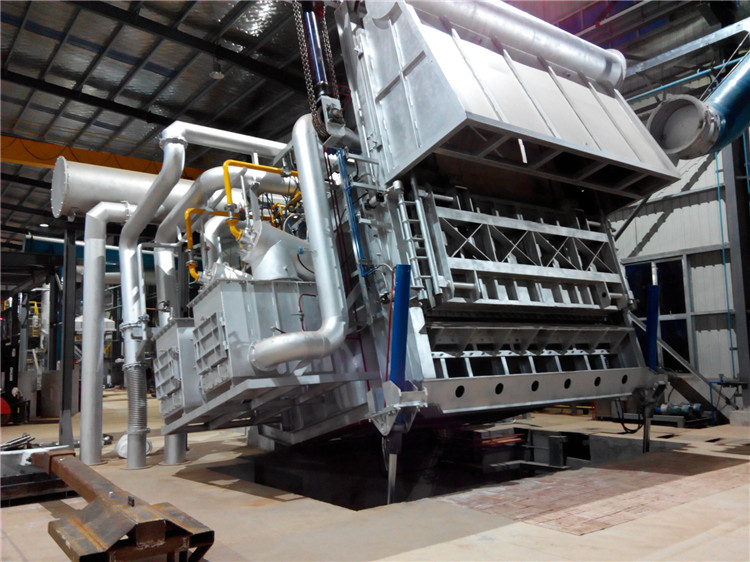
Rectangular reverberatory furnace: The most traditional type, utilizing flame and radiant heat to melt scrap copper. It features a simple structure and low investment costs, making it suitable for large-scale primary smelting; capacities range from small units (10–50 tons) to large ones (100–400 tons).
Tilting rectangular furnace: An upgraded version of the reverberatory furnace, featuring a hydraulically tiltable body that integrates melting, holding, and refining processes. With capacities of 5–30 tons, it offers operational flexibility, convenient slag removal, and a long service life; capable of processing both solid and liquid charges, it is the most widely used type in refineries.
Medium-frequency induction rectangular furnace: Utilizes electromagnetic induction to generate heat directly within the copper charge, resulting in rapid heating and high thermal efficiency. Electromagnetic stirring ensures uniform composition and temperature, minimizes metal loss, and allows for precise temperature control. It is ideal for high-quality copper alloys and precision casting.
In summary, each furnace type offers distinct advantages: reverberatory furnaces are suited for large-volume primary smelting, tilting furnaces excel in multi-stage refining, and induction furnaces meet the requirements for high-quality smelting. Users should select the appropriate furnace type based on production scale, energy availability, and product quality objectives.