



NEWS&EVENTS
Home > News&Events > Company news > What are the advantages of the rotatable furnace body of a rotary antimony refining furnace?
The rotatable furnace body of the rotary antimony refining furnace represents a core technological innovation distinguishing it from traditional stationary reverberatory furnaces; this design offers multifaceted advantages to the smelting process, significantly enhancing production efficiency and product quality.
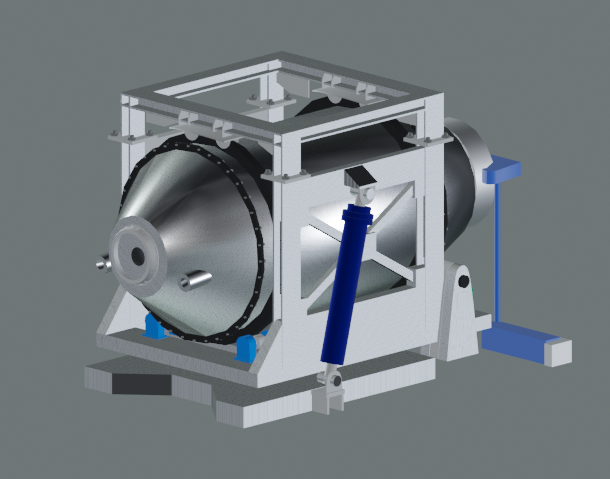
First, the dynamic tumbling action eliminates temperature gradients, ensuring uniform heating of the material. Continuous rotation keeps the material in constant motion, maintaining consistent temperatures throughout the charge and thereby ensuring the completeness of smelting reactions and product uniformity. Simultaneously, the forced agitation generated by rotation disrupts the compositional stratification often found in static furnaces, accelerates refining kinetics, effectively reduces metal loss, and improves antimony recovery rates.
Second, an independent drive system grants the equipment a high degree of process flexibility. Operators can flexibly adjust the furnace's rotation speed and direction based on specific material characteristics and the requirements of different stages, such as smelting and refining. This adjustability allows a single rotary furnace to switch conveniently between producing high-purity metallic antimony and high-value-added antimony trioxide by modifying parameters like temperature and atmosphere, thereby enabling flexible production and enhancing market responsiveness.
Furthermore, the rotatable furnace body excels in terms of efficiency and environmental performance. Rotation intensifies mass and heat transfer, drastically shortening refining times. The furnace's excellent sealing capabilities effectively minimize fugitive emissions of dust and fumes, facilitating centralized collection and treatment in compliance with clean production standards. A modular component design also allows for the independent replacement of critical parts, thereby reducing maintenance costs and downtime.
In summary, the rotatable furnace body—combining uniform heating, flexible control, and clean, efficient operation—serves as a core piece of equipment driving the upgrade of antimony smelting toward greener and smarter production.