



NEWS&EVENTS
Home > News&Events > Company news > What role does the sealing structure of a rotary antimony refining furnace play in environmental protection?
From an environmental perspective, the multi-point sealing structure of the rotary antimony refining furnace is not merely a physical barrier but a core component of pollution control at the source. Its primary function is to shift the approach from "end-of-pipe treatment" to "source control" through a systematic containment framework, specifically in the following two ways:
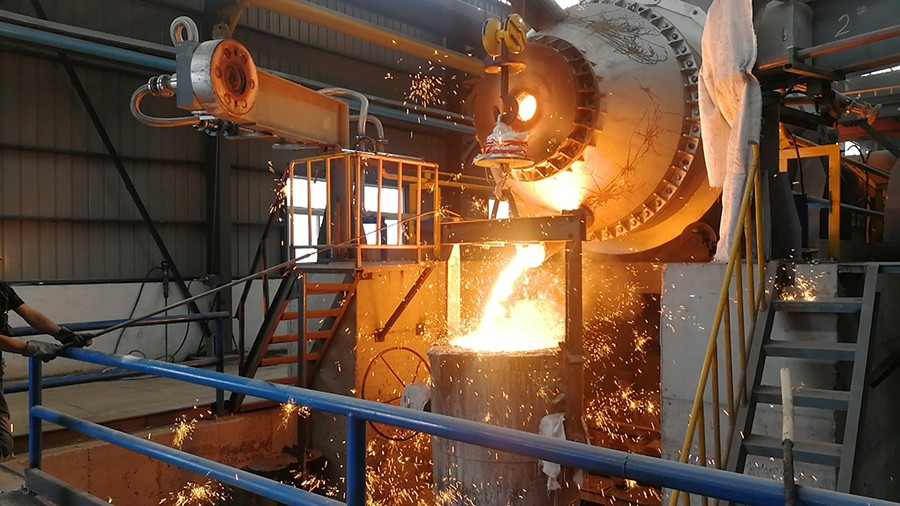
First, it ensures the organized collection of flue gas, thereby eliminating fugitive emissions. The high-temperature flue gas generated during antimony refining contains high concentrations of SO₂ and heavy metal dust (such as As₂O₃). The multi-point sealing structure establishes a negative-pressure environment at critical leakage points—such as the furnace head, furnace tail, and feed inlet—guaranteeing that 100% of the smelting flue gas is routed through designated channels into the purification system.
Second, it guarantees purification efficiency and drives resource recovery. The fully enclosed furnace body, combined with a high-efficiency dust collection system, significantly boosts the flue gas capture rate (typically exceeding 99%). This creates stable operating conditions for subsequent processes, such as dry dust collection (e.g., baghouse filtration) and wet desulfurization. On one hand, it enables the efficient recovery of valuable antimony oxide dust, preventing resource waste and the accumulation of heavy metals in the soil; on the other, it ensures a constant gas intake for the desulfurization tower, allowing SO₂ conversion rates to meet environmental compliance standards.
In summary, this sealing structure serves as the technical cornerstone for achieving clean production in rotary antimony refining furnaces. By containing pollution at its source, it mitigates the risk of environmental penalties and safeguards the occupational health of workers, acting as a critical element in the green transformation of modern antimony smelting enterprises.