



NEWS&EVENTS
Home > News&Events > Company news > How many types of products can a rotary antimony refining furnace produce simultaneously?
A rotary antimony refining furnace allows for the alternating production of two mainstream products—high-purity antimony ingots and antimony trioxide (Sb₂O₃) powder—within a single unit by switching process conditions. Rather than simultaneous production, the system operates on a flexible "dual-purpose" model.
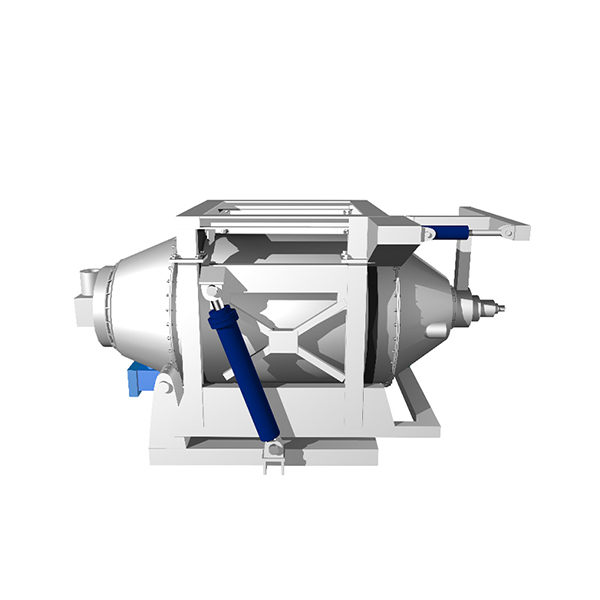
Switching between these two products is achieved primarily through precise control of temperature and the furnace atmosphere:
To produce high-purity antimony ingots (metallic antimony): Refined, high-purity molten antimony is cast directly into ingots under a reducing atmosphere. These products are primarily used in lead-acid batteries, alloys, and semiconductors.
To produce antimony trioxide powder (antimony white): Excess air is blown into the furnace under an oxidizing atmosphere, causing the metallic antimony to volatilize and oxidize. The resulting gaseous oxides are then cooled and captured by a high-efficiency dust collection system, yielding high-whiteness, fine-particle antimony trioxide powder. This product serves as a vital flame retardant and chemical raw material.
The core advantage of the rotary antimony refining furnace design lies in its exceptional process flexibility. Enterprises can rapidly switch production lines on the same piece of equipment in response to market demand and price fluctuations, thereby maximizing economic returns.