



NEWS&EVENTS
Home > News&Events > Company news > What are the main structural components of a rotary antimony refining furnace?
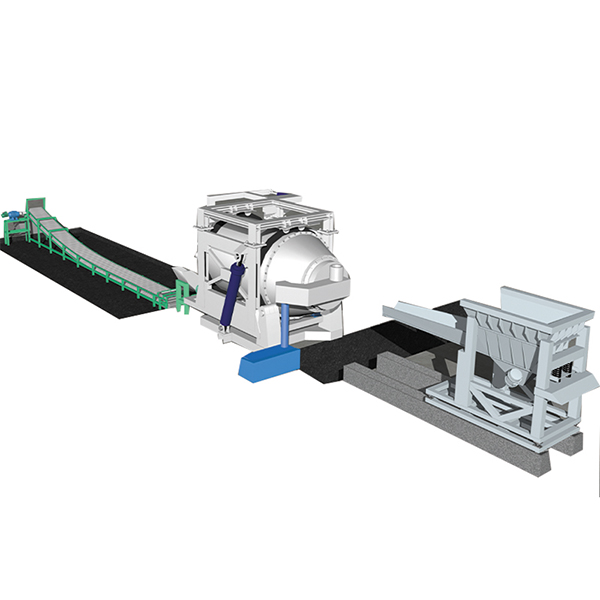
The rotary antimony refining furnace is a highly efficient, eco-friendly pyrometallurgical refining unit. Its structural design centers on dynamic reaction dynamics, precise temperature control, and clean production, comprising the following key systems:
The furnace body serves as the core component, featuring a rotatable horizontal cylindrical design. The rotation mechanism ensures continuous tumbling and mixing of the molten antimony and slag, eliminating the temperature gradients and compositional stratification common in traditional static furnaces, thereby significantly enhancing the rate and uniformity of the refining reaction.
The combustion and heating system provides the necessary thermal energy, typically utilizing independently adjustable gas or oil burners. Power output can be flexibly regulated according to specific process stages—such as impurity removal or heating—to ensure the furnace temperature precisely meets reaction requirements.
The air supply and exhaust systems are critical for process transitions. During refining stages (e.g., arsenic or lead removal), air supply is shut off or minimized to reduce volatilization and oxidation; conversely, during oxidation stages (e.g., selenium or iron removal), a high-capacity air supply system is activated to blow air or oxygen-enriched gas into the melt. The exhaust channel connects to a bag-type dust collection system, purifying high-temperature, dust-laden flue gas to ensure environmentally compliant emissions.
The temperature and atmosphere monitoring system employs multi-point thermocouples and gas analyzers to provide real-time feedback on furnace temperature and oxygen partial pressure, supplying the data needed for operators to precisely control the reaction process.
The sealing structure incorporates multiple seals at key interfaces—such as the furnace door, flue, and burner ports—to effectively prevent the escape of hazardous flue gases, thereby ensuring clean and safe production.
The tilting discharge mechanism utilizes hydraulic or mechanical devices to tilt the furnace body toward the discharge outlet, ensuring the smooth drainage of refined molten antimony and preventing material accumulation at the furnace bottom.
Through the synergistic integration of these structural components, the rotary antimony refining furnace offers significant advantages, including high reaction efficiency, precise temperature control, operational flexibility, and strong environmental performance.