For a long time, reverberatory furnaces have been the mainstay of the antimony smelting industry. However, amidst increasingly stringent environmental regulations, rising energy costs, and intensifying market competition, the inherent flaws of reverberatory furnaces—such as low thermal efficiency, poor temperature uniformity, and significant fluctuations in direct recovery rates—have become increasingly problematic, challenging the economic viability of this traditional equipment.
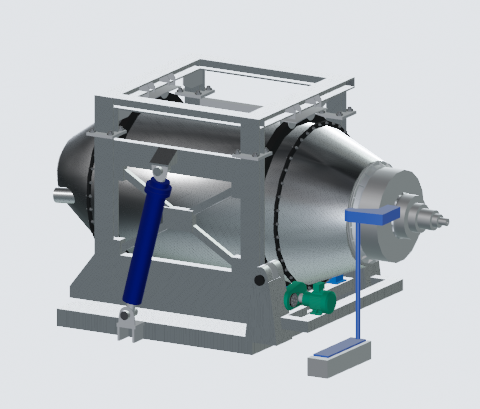
Against this backdrop, rotary antimony smelting furnaces are rapidly emerging as the mainstream alternative to reverberatory furnaces.
Compared to stationary reverberatory furnaces, short-drum rotary furnaces offer two key advantages:
Superior material mixing: The rotating furnace body ensures continuous tumbling of the material, facilitating dynamic heating and completely eliminating temperature gradients within the charge.
Faster smelting speeds: A highly uniform temperature field and thorough contact between reactants significantly enhance the completeness and consistency of the smelting reactions.
This fundamental design difference directly leads to improvements in both production efficiency and product quality. For smelting enterprises, this represents more than just an equipment upgrade; it signifies a transformation of smelting economics—lower energy consumption, higher recovery rates, and more stable quality control translate into tangible cost savings and profit growth.
Procurement Insight: If you are planning a new production line or considering upgrading existing reverberatory furnaces, the rotary antimony smelting furnace should be the primary option you evaluate.