



NEWS&EVENTS
Electrolytic refining is a critical metallurgical process that further purifies the blister copper produced by pyrometallurgical refining into high-purity electrolytic copper. Copper from pyrometallurgical refining typically retains 0.5%–0.8% impurities, which impair its electrical conductivity, thermal conductivity, and mechanical workability. Electrolytic refining not only effectively removes impurities to yield ultra-pure cathode copper but also enables the recovery of precious metals—such as gold and silver—from the anode slime.
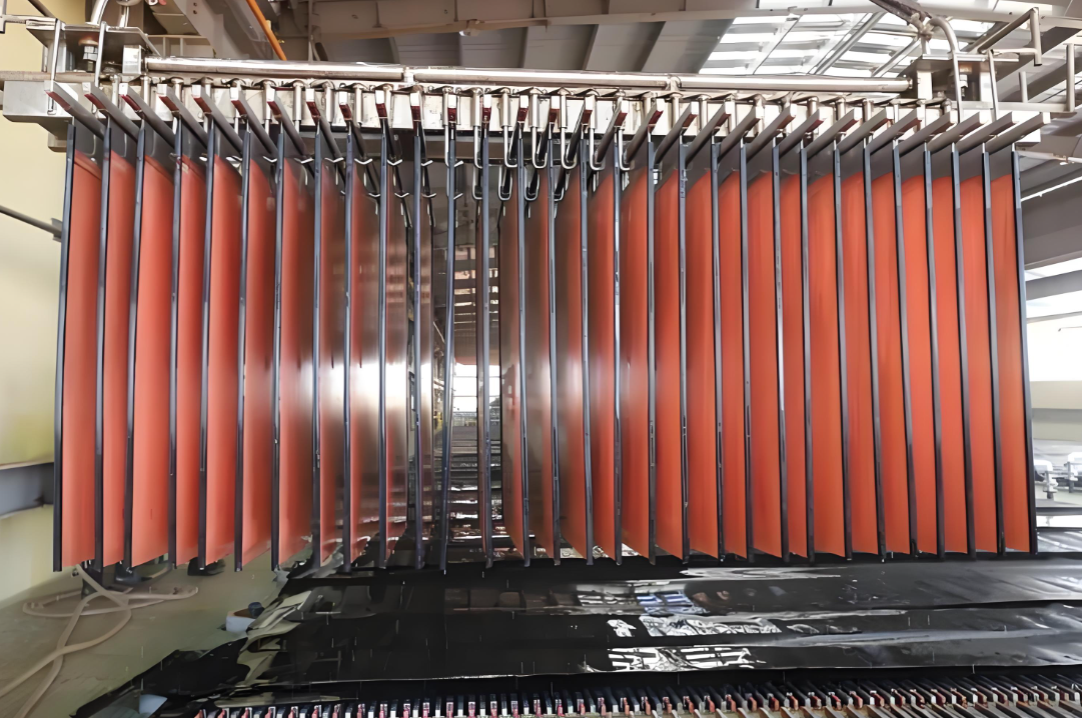
Electrolytic refining takes place in an electrolytic cell. Blister copper is cast into thick plates to serve as anodes, while thin sheets of pure copper (starter sheets) or stainless steel plates serve as cathodes; a mixed solution of copper sulfate and sulfuric acid acts as the electrolyte. Upon the application of direct current, the copper anode dissolves into the solution as copper ions, which then gain electrons at the cathode and deposit as pure copper.
The separation of impurities depends on their electrode potentials:
Impurities more reactive than copper (e.g., iron, zinc, nickel): These dissolve into the electrolyte along with the copper but do not deposit at the cathode; they must be removed through electrolyte purification.
Impurities less reactive than copper (e.g., gold, silver, platinum-group metals): These do not dissolve and instead settle at the bottom of the electrolytic cell as "anode slime." Anode slime serves as a vital raw material for precious metal recovery.
Impurities with potentials similar to copper (e.g., arsenic, antimony, bismuth): These partially dissolve into the electrolyte and partially hydrolyze, settling into the anode slime.
Cathode copper produced via electrolytic refining achieves a purity of over 99.95% and is widely used in sectors such as electrical engineering, machinery manufacturing, and the chemical industry.
By leveraging electrochemical principles to achieve both the efficient purification of blister copper and the comprehensive recovery of precious metals, electrolytic refining stands as an indispensable link in the modern copper metallurgy industry.