



NEWS&EVENTS
Home > News&Events > Company news > High-Purity Antimony Cathode Production | Electrorefining & Precious Metal Recovery
Antimony electrolytic refining is a highly efficient purification method based on electrochemical principles. Crude antimony plates serve as the anode; electrolysis is conducted in a specialized electrolyte to separate antimony from impurities.
1. Anodic Dissolution
The antimony anode undergoes electrochemical dissolution in the electrolyte, releasing antimony ions into the solution. Due to differences in electrode potential, precious metals such as silver and gold do not dissolve; instead, they concentrate in the anode slime, from which they can be recovered.
2. Cathodic Deposition
Antimony ions gain electrons at the cathode and are reduced to form high-purity cathode antimony, characterized by a dense structure and extremely low impurity content.
3. Melting and Casting
The cathode antimony undergoes melting and casting to produce high-purity antimony ingots that meet industrial standards.
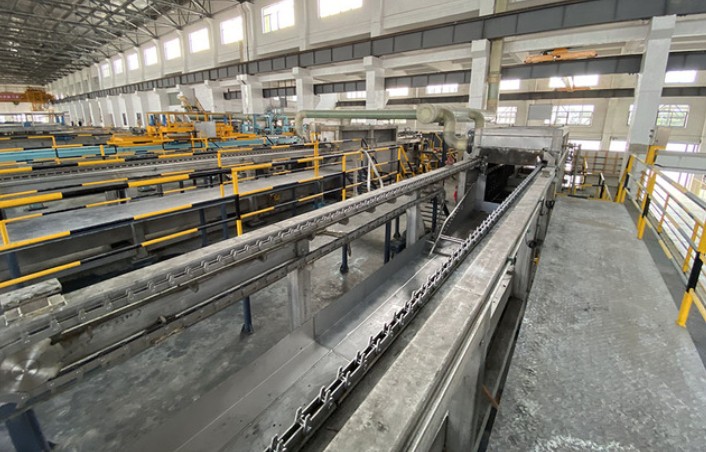
Selective Separation: Antimony is automatically separated from silver and gold.
Resource Recovery: Precious metals can be extracted from the anode slime, enhancing added value.
Environmentally Friendly and Controllable: The electrolyte can be recycled.
High-purity antimony ingots are widely used in fields such as flame retardants, alloys, and semiconductors, making them a vital strategic metal material.