



NEWS&EVENTS
Home > News&Events > Company news > Antimony Electrolytic Refining Technology: From Anode Dissolution to High-Purity Antimony Ingots
In the non-ferrous metal smelting sector, antimony—a strategic metal—is widely utilized in the flame retardant, alloy, and semiconductor industries. Amid the depletion of high-grade resources, the antimony electrolytic refining process has emerged as a core technology for enhancing purity and comprehensively recovering associated precious metals, thanks to its advantages of efficient separation and clean production.
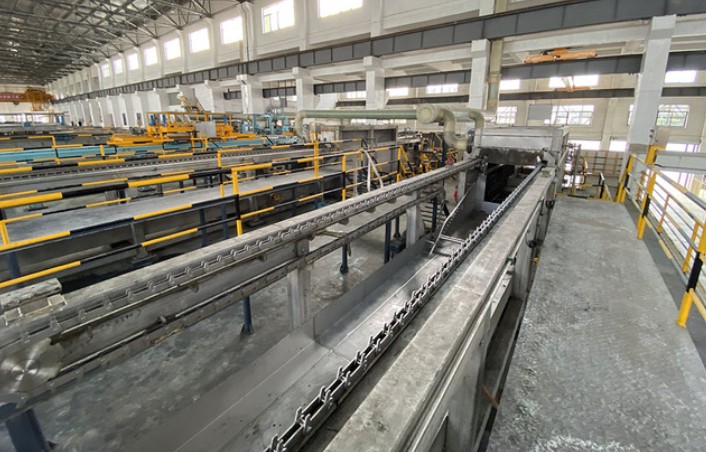
This process relies on the principles of hydrometallurgical electrolysis using insoluble anodes, with the electrolytic cell serving as the core piece of equipment. Anodes cast from crude antimony are placed in a specific electrolyte system, and direct current is applied. Upon electrification, the anode undergoes electrochemical dissolution, releasing antimony ions into the electrolyte. Conversely, precious metals such as gold (Au) and silver (Ag)—possessing higher electrode potentials—do not participate in the reaction; instead, they remain in solid form at the bottom of the cell, creating economically valuable anode slime. This by-product is regarded as a "secondary gold mine," from which valuable elements like silver and gold can be recovered through subsequent hydrometallurgical steps, thereby significantly boosting overall economic returns.
At the cathode, antimony ions gain electrons and are reduced, depositing as dense metallic antimony (with an antimony content of ≥99.5%). However, as this intermediate product contains residual electrolyte and trace impurities, it must undergo a melting and casting process in a reverberatory furnace or medium-frequency induction furnace. High-temperature smelting drives off volatile components, while refining agents facilitate the deep removal of impurities such as arsenic, lead, and iron. Finally, the molten metal is cast and cooled to produce high-purity antimony ingots that meet national standards.
This technology ingeniously leverages differences in electrochemical properties to achieve purification, separation, and enrichment in a single step; furthermore, the electrolyte is recyclable, making the process environmentally friendly. As precious metal resources become increasingly scarce, this process—along with its associated anode slime recovery route—provides robust technical support for the green, high-quality development of the antimony industry.