



NEWS&EVENTS
Antimony electrolytic refining is a critical hydrometallurgical process for increasing the purity of crude antimony and separating precious metals; the electrolytic cell—the core piece of equipment—directly determines production efficiency and product quality.
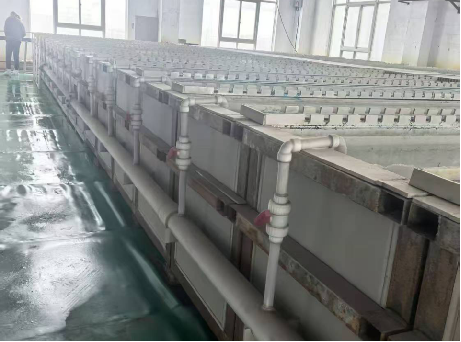
1. Mainstream Materials: Industrial electrolytic cells are commonly constructed from PVC or polypropylene plastics. These materials offer excellent corrosion resistance, capable of withstanding prolonged exposure to acidic electrolytes.
2. Typical Dimensions: A common cell size is approximately 2m × 0.9m × 0.6m, with anode frames and cathode plates arranged internally at an inter-electrode spacing of 100–160 mm. Dimensions can be customized based on production capacity.
To address the challenges posed by the brittleness of antimony anode plates and the formation of anode scrap, anode frames are typically fabricated from titanium plates and mesh, with the cast crude antimony anode plates inserted into these titanium frames. Upon electrification, the antimony anode within the frame dissolves, and pure antimony deposits onto the cathode (titanium or copper plate). This approach enables scrap-free electrolysis, eliminating the need to clean and remelt anode scrap, thereby significantly reducing processing costs and ensuring operational stability.
The design of antimony electrolytic cells is evolving toward greater corrosion resistance, higher efficiency, and increased automation. Whether utilizing an aqueous solution system—featuring permanent cathodes and anode frames—or a high-temperature molten salt system, optimizing the cell structure (such as through advancements in diaphragm and electrode materials) remains a key breakthrough for enhancing antimony recovery rates and purity.