



NEWS&EVENTS
Home > News&Events > Company news > What are the steps for processing aluminum dross in a rotary aluminum melting furnace?
As critical equipment for aluminum dross processing and recycled aluminum production, the rotary aluminum melting furnace requires an operating procedure that is both standardized and comprehensive; the quality of this process directly impacts metal recovery rates, energy consumption, and equipment service life. A complete, standardized operating cycle is not merely a matter of melting and discharging material, but a precisely coordinated process involving temperature control, physical agitation, and time management. To ensure safety and efficiency, operators must strictly adhere to the established procedures, executing the entire workflow—from furnace lining maintenance to the discharge of residual material—in the correct sequence.
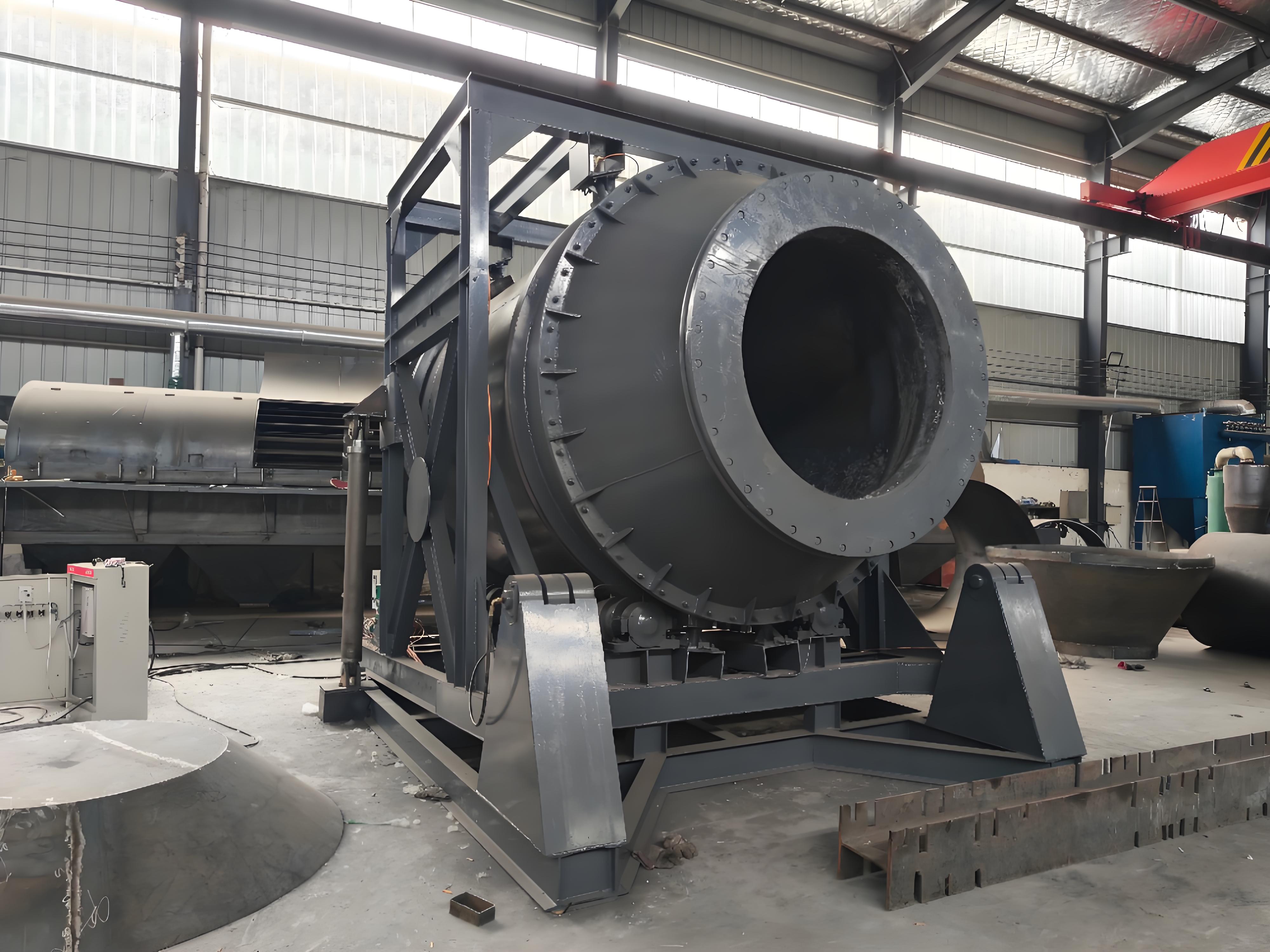
Bedding and Charging: Establish a base layer using cold dross, then add hot dross.
Agitation and Heating: Initiate furnace rotation and agitation, utilizing the dross's self-combustion to raise the temperature.
First Aluminum Discharge: Stop rotation, tilt the furnace body, and pour out the molten aluminum.
Second Agitation and Discharge: Add cold dross to lower the temperature, agitate the mixture again, and discharge the aluminum.
Dross Discharge: After the molten aluminum has been drained, lower the temperature and discharge the remaining hot dross.
The operating cycle concludes once the hot dross has been discharged and the furnace body has cooled down. At this stage, on-site personnel must promptly clean the work area and conduct a routine inspection of the furnace; only after confirming everything is in order may preparations for the next charging cycle begin. Repeating this process creates a continuous, stable production loop, which is essential for ensuring the workshop meets its daily production targets.