



NEWS&EVENTS
Home > News&Events > Company news > Process Flow and Technical Advantages of Recycled Copper Anode Production
The core process for producing recycled copper anodes comprises pretreatment, smelting and slagging, and oxidation-reduction refining, aiming to transform complex scrap copper into anode copper that meets electrolytic standards.
Pretreatment and Sorting: Scrap copper is first manually sorted to separate materials such as cables, bare copper, and brass. Rubber-sheathed cables are processed through a stripping machine to recover clean copper, while electrolytic anode scraps are prepared directly; sorted materials are then bundled by category for subsequent use.
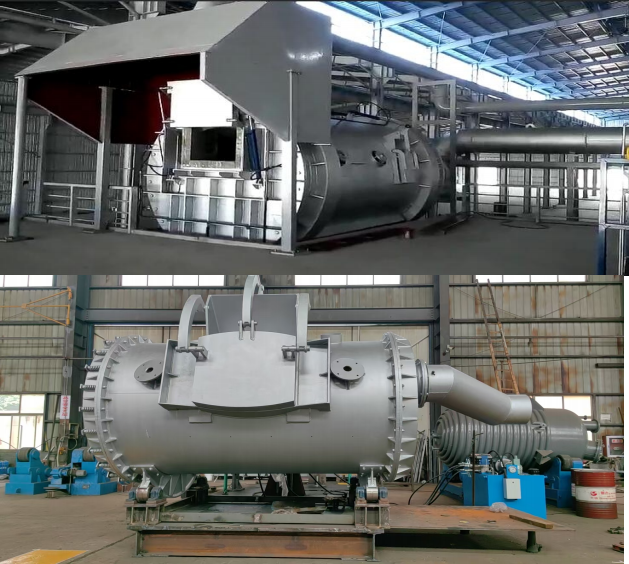
Smelting and Slagging: The rotary furnace chamber is preheated to 1,100°C using a premixed diesel-air combustion system to ensure uniform heating. Scrap copper charges melt rapidly upon entering the furnace; slagging agents are added to bind impurities, and samples are taken to analyze the material's composition.
Oxidation-Reduction Refining: During the oxidation stage, compressed air is injected to convert impurities—such as iron and zinc—into slag for removal. In the reduction stage, the atmosphere is switched to a reducing environment to remove excess oxygen and restore the copper's electrical conductivity, with continuous sampling performed until quality standards are met.
Technical Advantages: This rotary furnace process offers high combustion efficiency and reduced fuel consumption; it generates minimal exhaust gas and dust, thereby easing the environmental burden; and it requires low flux consumption, reducing auxiliary material costs. The resulting anode copper maintains a purity of over 99%, balancing production efficiency, cost control, and environmental friendliness, making it a mature solution for recycled copper processing.