Electrolytic refining is the core stage in antimony purification; it transforms crude antimony—derived from pyrometallurgical smelting—into high-purity cathode antimony, thereby providing the essential raw material for the production of downstream products such as antimony trioxide (Sb₂O₃).
Crude antimony produced via high-temperature reduction smelting (containing impurities such as gold and silver) is first cast into antimony anode plates. In the electrolytic cell, these anode plates and cathodes (initially titanium plates or thin sheets of pure antimony) are immersed in a specific acidic electrolyte, and direct current is applied. The flake-like cathode antimony stripped from the cathodes is washed, dried, and then sent to the melting and casting stage. Here, it is remelted and cast under a protective flux cover to yield uniform, high-purity antimony ingots. These ingots serve directly as premium feedstock for the downstream oxidation process.
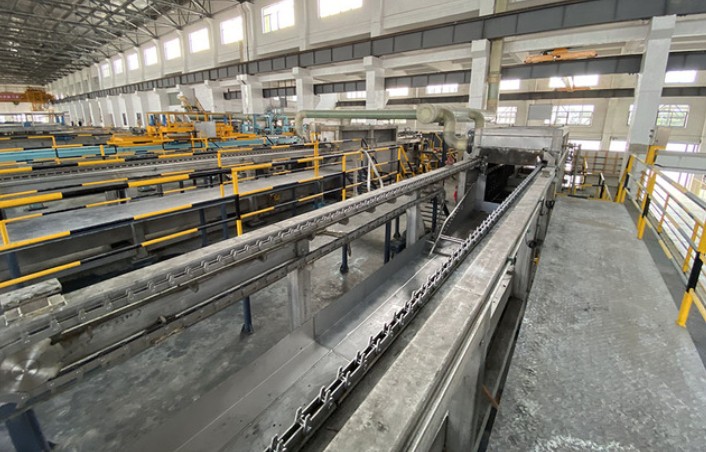
Spent electrolyte generated during electrolysis is neutralized and recycled, while anode slime serves as a secondary resource for precious metal recovery; this approach enables the utilization of valuable elements and aligns with trends in green, circular manufacturing.
The electrolytic antimony production line achieves precise separation of antimony from impurities through electrochemical means, producing ingots that are a prerequisite for manufacturing flame-retardant grade Sb₂O₃ powder. This stage integrates seamlessly with upstream roasting and reduction processes and downstream oxidation processes, collectively forming the complete production workflow of the modern antimony industry.