



NEWS&EVENTS
Home > News&Events > Company news > Process for Producing Antimony Ingots and Recovering Precious Metals from Crude Antimony
Crude antimony is typically produced from stibnite (Sb₂S₃) through roasting (desulfurization) and reduction smelting. To meet the stringent purity requirements for high-end flame retardants (Sb₂O₃), alloys, and semiconductor materials, crude antimony is cast into anode plates for electrolytic refining.
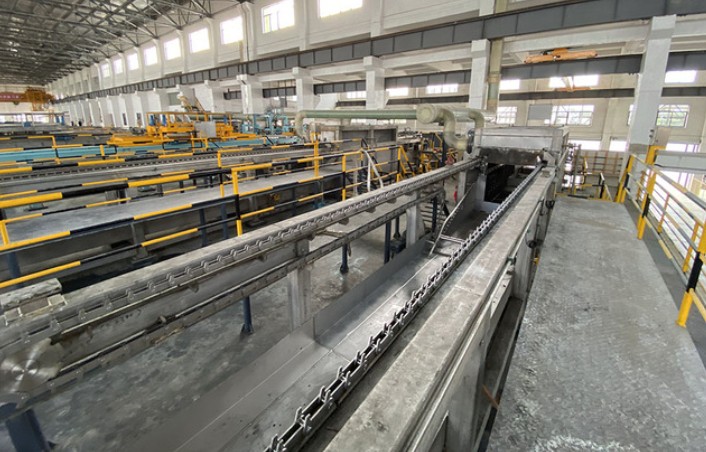
1. Electrolytic Cell System: Antimony anode plates serve as the anode, while titanium plates or antimony starter sheets serve as the cathode; an acidic electrolyte is used.
2. Electrolysis: Under direct current, oxidation occurs at the anode, releasing antimony ions into the solution; reduction occurs at the cathode, where high-purity antimony continuously deposits.
3. Impurity Behavior: Noble metals with more positive electrode potentials, such as Ag and Au, do not dissolve and instead concentrate in the anode slime; impurities like As and Fe partially remain in the electrolyte or form floating dross, which is removed through periodic purification.
Pure antimony deposited on the cathode is stripped, washed, and dried, then remelted under a protective atmosphere to produce high-purity antimony ingots. This product serves as an ideal raw material for manufacturing Sb₂O₃ powder.
Anode slime is a crucial secondary source of silver and gold; typical treatment processes include:
Acid Leaching (Antimony Removal): Separates residual antimony and concentrates noble metals.
Pyrometallurgical Smelting: Fluxes are added, and the material is smelted to produce a lead-rich alloy.
Electrolysis: Further separates crude silver and gold, refining them into finished gold and silver ingots, thereby significantly enhancing overall economic returns.
Electrolytic refining enables the stable production of pure antimony while simultaneously recovering noble metals, making it an environmentally friendly process.