



NEWS&EVENTS
Home > News&Events > Company news > Rotary Furnace for Pyrometallurgical Antimony Smelting: Reduction Smelting and Refining Processes
As core equipment in the pyrometallurgical smelting of antimony, rotary furnaces play a vital role in both reduction smelting and refining processes. Their operational advantages lie primarily in the precise control of reaction temperatures, furnace atmospheres, and material residence times.
1. Reduction Smelting Process: Antimony oxide powder (Sb₂O₃)—derived from volatilizing roasting—is mixed with reducing agents such as coke or anthracite and fed into the rotary furnace. The high-temperature environment within the furnace facilitates the reduction of Sb₂O₃ into metallic antimony. Excellent temperature uniformity effectively lowers the antimony content in the slag, significantly boosts the direct metal recovery rate, and minimizes resource waste.
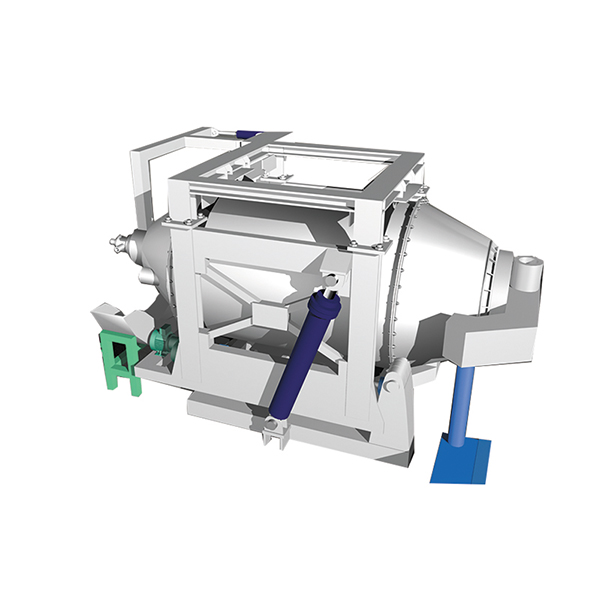
2. Pyrometallurgical Refining Technology: Rotary furnaces are employed to refine crude antimony by removing impurities such as arsenic, iron, and lead. During operation, the continuous rotation of the furnace body constantly renews the contact interface between the molten antimony and the slag, thereby substantially accelerating the oxidation-based impurity removal reactions.
Supporting Systems: Modern rotary furnace operations require integrated multi-stage flue gas dust removal and desulfurization/purification systems to ensure exhaust emissions meet regulatory standards. Additionally, waste heat recovery technology is utilized to reduce overall energy consumption and achieve cleaner production.
In summary, thanks to their versatility and controllability, rotary furnaces have become key equipment for antimony smelting enterprises seeking to improve quality and enhance efficiency.