This represents the most common and typical application of rotary furnaces in copper smelting; consequently, they are often referred to simply as rotary refining furnaces or rotary anode furnaces. Their primary function is to further purify blister copper (produced in upstream processes) via pyrometallurgical refining and ultimately cast it into copper anodes suitable for electrolysis.
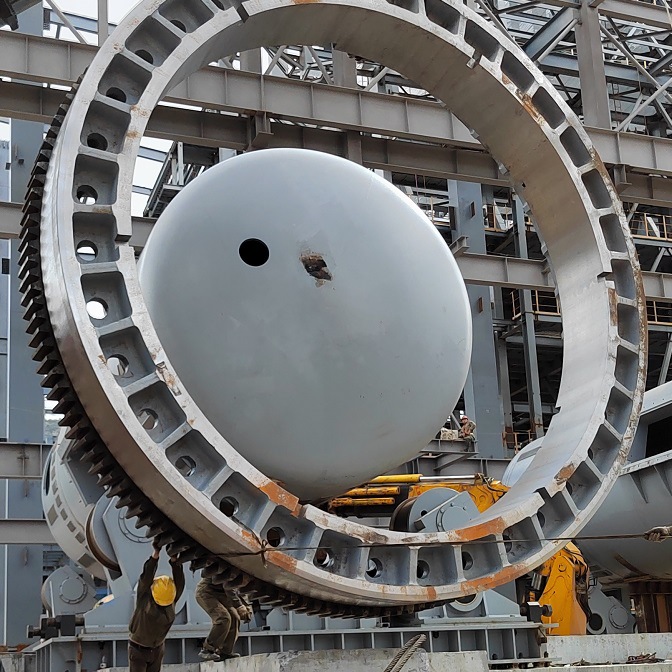
Core Structure: The furnace body is a horizontal cylinder comprising three main components: the furnace shell itself, the support system, and the drive/control system. Key process openings—such as the furnace mouth, copper discharge outlet, and oxidation/reduction ports—are located on the furnace body.
Operational Mode: The furnace body is capable of tilting and rotating. Rotation allows the side-mounted tuyères (nozzles) to be submerged in or lifted above the molten copper bath; this enables the injection of air to oxidize impurities during the oxidation phase, and the injection of reducing agents—such as heavy oil or natural gas—to reduce cuprous oxide to metallic copper during the reduction phase. This capability is why it is also known as a "tilting furnace."
Operating Environment: Operating temperatures are extremely high, reaching up to 1450°C during the oxidation phase. Furthermore, the rotation of the furnace body subjects the refractory lining to extensive scouring by slag and molten copper, placing rigorous demands on the refractory materials used.
The widespread adoption of rotary furnaces in copper smelting is primarily due to their advantages: operational flexibility, relatively low labor intensity, and excellent sealing performance.
Are you interested in the specific rotary furnace equipment itself, or are you focusing on the associated process solutions within the smelting workflow? Please leave a message to inquire.