As a vital strategic metal, antimony (Sb) is indispensable in fields such as flame-retardant materials, electronic components, and chemical catalysis. The production of its high-value derivative, antimony trioxide (Sb₂O₃) powder, involves a complex chain of processes—ranging from pyrometallurgy to electrochemical refining—that demands rigorous process control.
Step 1: Oxidative Desulfurization (Roasting)
The raw material, stibnite (Sb₂S₃), undergoes roasting with limited air supply in a rotary kiln at temperatures between 800°C and 1000°C. Sulfur is oxidized and removed as SO₂ gas, yielding an antimony-rich oxide (antimony oxide powder) and achieving the initial separation of antimony from sulfur.
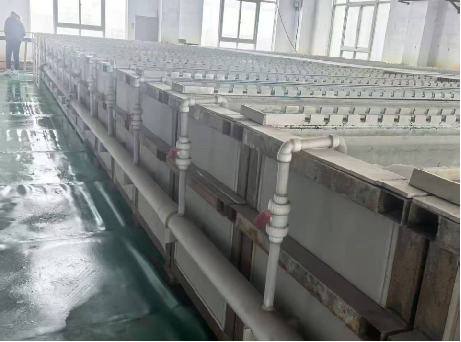
Step 2: Reduction Smelting and Electrolytic Refining
The antimony oxide powder is smelted with a reducing agent at approximately 1200°C to produce crude antimony. This crude antimony is cast into anode plates and placed in an electrolytic cell. In a specific electrolyte, the antimony anode dissolves; precious metals like gold and silver remain in the anode slime (for recovery), while high-purity antimony deposits at the cathode and is subsequently cast into high-purity ingots.
Step 3: High-Temperature Oxidation and Rapid Quenching/Collection
High-purity antimony ingots are remelted in an oxidation furnace (at approximately 1000°C) and oxidized via volatilization in a strongly oxidizing atmosphere to generate gaseous Sb₂O₃. This gas is rapidly condensed in a quenching zone (such as a baghouse dust collector) to produce a flame-retardant grade powder characterized by uniform particle size, high whiteness, and a cubic crystal structure.
Key Control Points
Precise control over roasting temperature, electrolysis current/voltage, and oxidation/condensation rates is essential throughout the process. Fluctuations at any stage affect the final purity and particle size; only through strict parameter optimization can the product meet the stringent standards required by the electronics and chemical industries.