



NEWS&EVENTS
Home > News&Events > Company news > How can the service life of the refractory materials in an aluminum melting rotary furnace be extended?
The rotary aluminum melting furnace is a critical piece of thermal equipment in the aluminum alloy smelting process; the service life of its refractory lining directly impacts production continuity, product quality, and overall operation and maintenance costs. Measures to extend the service life of the refractory materials include:
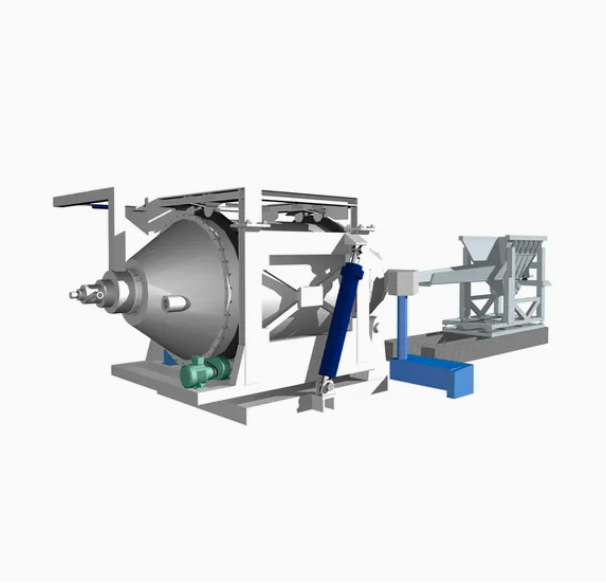
(1) Strictly adhering to protocols for furnace dry-out, start-up, and shutdown—specifically, following the prescribed heating curve for new furnaces or newly relined brickwork and avoiding rapid temperature increases during the 300°C–600°C and above-1200°C stages;
(2) Maintaining stable thermal operating conditions by preventing direct flame impingement on the furnace shell and refractory bricks, and avoiding drastic temperature fluctuations and strongly reducing atmospheres;
(3) Ensuring the stability of the furnace shell to prevent frequent shell detachment, which can cause the surface layer of the refractory bricks to spall;
(4) Strengthening equipment maintenance by regularly checking the furnace centerline, stabilizing rotation speed, and minimizing the frequency of start-ups and shutdowns;
(5) Standardizing operational monitoring by using infrared scanners to track shell surface temperatures and regularly inspecting the condition of the refractory bricks.
Only by combining the aforementioned measures can one effectively resist molten aluminum penetration and thermal shock damage, thereby extending the service life of the refractory materials in the rotary aluminum melting furnace and laying a solid foundation for the long-term, stable operation of the smelting process.