



NEWS&EVENTS
Home > News&Events > Company news > Core Equipment and Process Functions for Pyrometallurgical Copper Smelting
The refining and casting stages of pyrometallurgical copper production center on the rotary anode furnace, launder system, rotary casting machine, and dust collection system; the coordination of these components determines production efficiency and product quality.
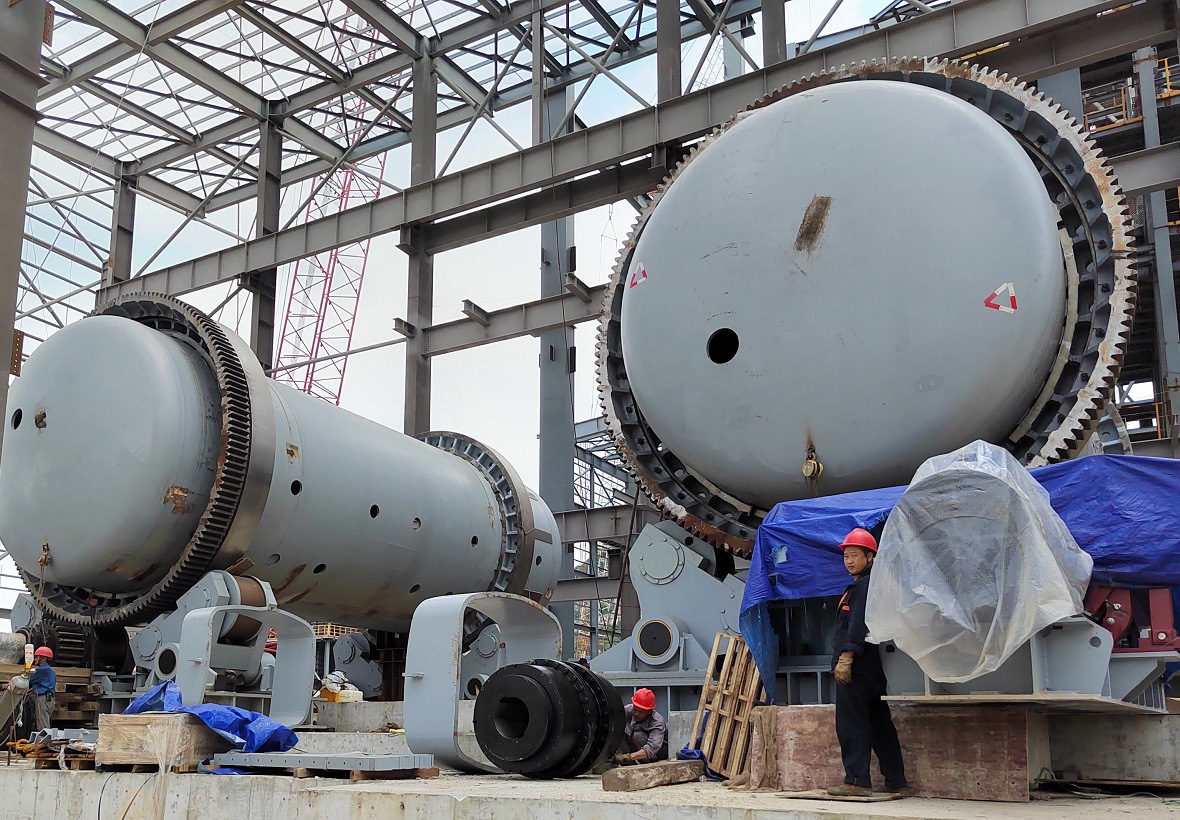
The rotary anode furnace is the core piece of equipment for pyrometallurgical refining; featuring a tilting mechanism, it enables charging, oxidation, reduction, and copper discharge to be performed within a single vessel. During the oxidation phase, compressed air is injected to remove impurities such as iron, lead, and zinc via slag formation; during the reduction phase, a reducing agent—such as natural gas—is introduced to remove oxygen from the molten copper, ensuring the chemical composition of the anode plates meets specifications.
The launder system handles the enclosed transport of molten copper at high temperatures. After refining, the molten copper flows via gravity from the discharge outlet, through movable and fixed launders, into the tundish and casting ladle. These launders are equipped with cooling jackets or refractory linings to maintain stable copper temperatures and ensure smooth flow.
The rotary casting machine is a large-scale casting unit integrating mechanical, electrical, hydraulic, and control systems. Under the monitoring of an electronic scale, the casting ladle automatically measures and pours a preset weight of molten copper into copper molds, where it is subsequently solidified into anode plates via water spray cooling.
Flues and dust removal equipment constitute the off-gas purification system. High-temperature off-gas travels through an uptake flue into a water-cooled flue or waste heat boiler for cooling and particulate settling, before entering a baghouse dust collector to capture dust and fumes. The purified gas undergoes desulfurization to meet emission standards, while the recovered copper-bearing dust can be recycled back into the smelting process.