



NEWS&EVENTS
Home > News&Events > Company news > What are the main components of a permanent cathode copper electrolysis production system?
The permanent cathode copper electrolytic production system is the core component of modern hydrometallurgical copper refining; the sophistication of its process design and the completeness of its equipment configuration directly determine cathode copper output, quality, and overall energy consumption. A deeper understanding of this complex system reveals the following:
The system comprises two primary, highly interconnected segments: the electrode handling system and the electrolysis system.
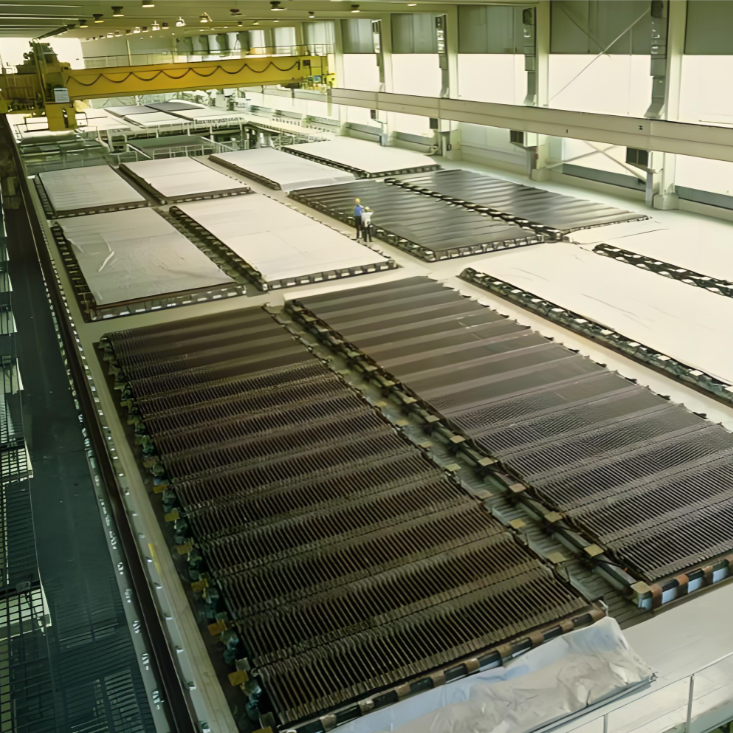
Electrode handling system: Responsible for the handling of anodes and cathodes as they enter and exit the electrolytic cells. It incorporates automated equipment such as specialized electrolysis cranes, anode shaping units, cathode stripping units, and scrap anode washing units, all of which ensure efficient and seamless electrode processing.
Electrolysis system: Responsible for the electrolytic refining of copper. Key components include electrolytic cells, electrolyte piping, conductive copper busbars, shorting switches, short-circuit detection systems, and cell voltage monitoring systems. Its function is to optimize current distribution, thereby enhancing current efficiency and the quality of the copper product.
The essence of the coordinated control between these two systems lies in optimizing current distribution and suppressing inter-electrode short circuits and impurity precipitation; this improves current efficiency, reduces DC power consumption, and ensures the stable production of high-purity cathode copper that meets required standards.