



NEWS&EVENTS
Home > News&Events > Company news > How Is Electrolytic Copper Purified from Blister Copper to 99.99%?
From blister copper to 99.99% pure copper, the core method is electrorefining. Blister copper (about 99%) is first cast into anode plates, and thin pure copper sheets are used as cathodes. Both are immersed in an electrolyte of sulfuric acid and copper sulfate. When current is applied, copper at the anode dissolves into the solution, while copper ions in the solution gain electrons at the cathode and deposit again as high-purity copper.
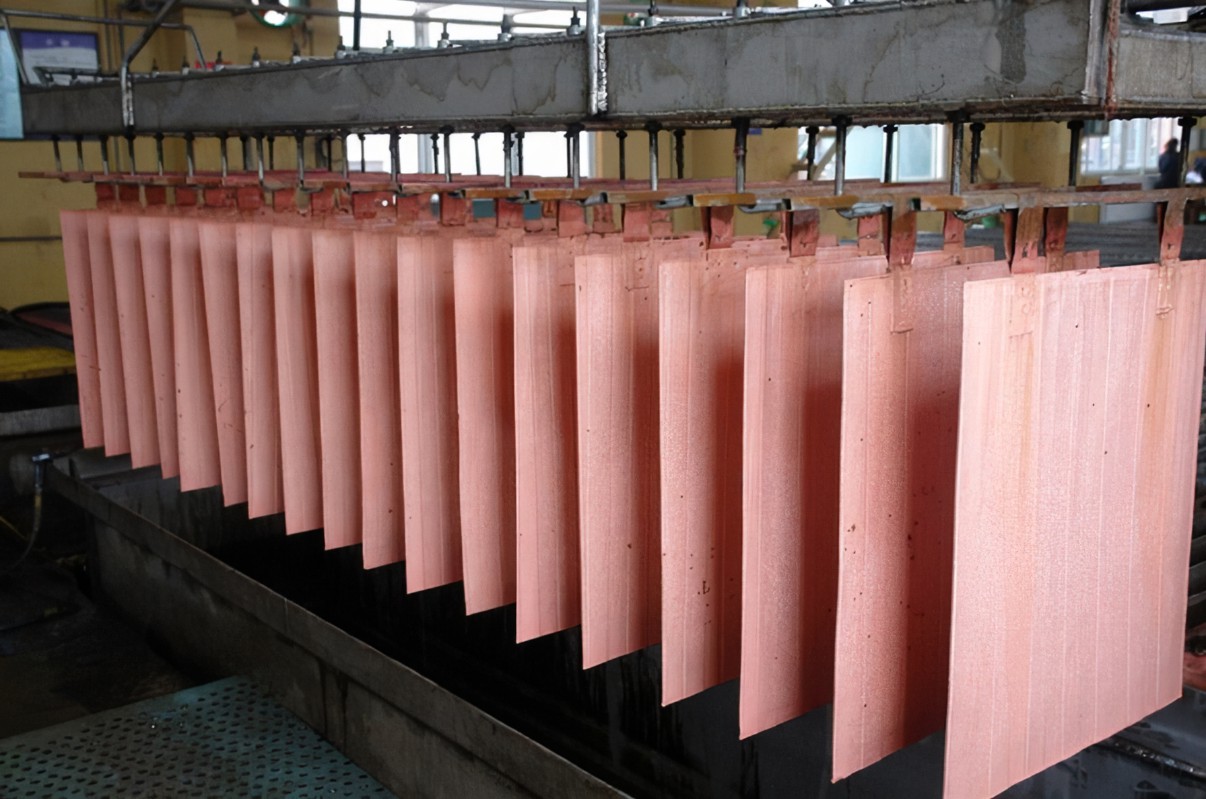
The key lies in how impurities are "diverted." More active metals than copper — such as iron, zinc, and nickel — dissolve into the electrolyte, but by controlling the voltage, they can hardly deposit at the cathode. Less active metals than copper — such as gold and silver — do not dissolve at all and settle directly to the bottom of the cell as anode slime. In this way, what grows on the cathode is electrolytic copper of extremely high purity.
In industry, a single electrolysis pass typically reaches over 99.95% purity. To stably achieve 99.99% (4N) or even higher, it is often necessary to combine electrolyte purification, additive control, or a second electrorefining stage. The final cathode copper produced can meet the high conductivity requirements of the electrical industry.