



NEWS&EVENTS
Home > News&Events > Company news > Why is electrolytic refining required after the pyrometallurgical refining of blister copper?
After fire refining, blister copper can reach a copper content of about 99.9%. This purity may seem high, but it still cannot effectively remove key impurities such as Ni, Fe, As, Sb, and Bi. These impurities significantly affect copper's conductivity, workability, and consistency, making it unsuitable for high-end applications.
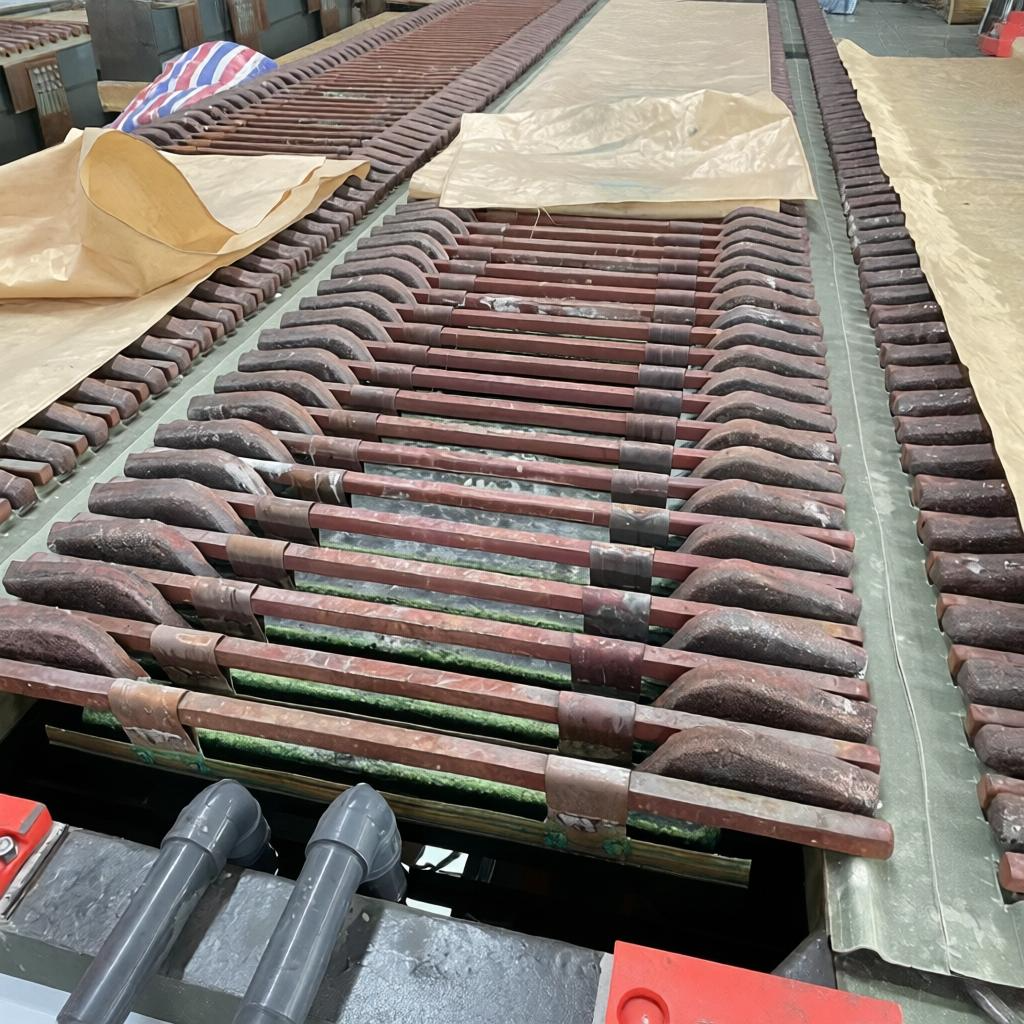
Electrorefining uses differences in electrochemical potential to achieve selective separation of copper from impurities:
This process can further raise copper purity to 99.99%, far beyond the level achieved by fire refining.
Fields such as cables, copper foil, and semiconductors have extremely high requirements for copper purity and consistency. Copper at 99.9% cannot reliably meet the conductivity and processing demands of these applications, whereas 99.99% high-purity cathode copper ensures reliable performance and batch-to-batch consistency.
Fire refining handles preliminary purification, while electrorefining handles deep impurity removal. Only by combining both can blister copper be transformed into high-purity cathode copper, supporting modern high-end copper applications.