



NEWS&EVENTS
Home > News&Events > Company news > Measures to Prevent Anode Slime Contamination of Cathodic Antimony in Antimony Electrolysis Equipment
During the operation of antimony electrolysis equipment, the quality of the cathodic antimony is directly affected by the extent of contamination from anode slime. If anode slime enters the cathode zone, it not only reduces the purity of the cathodic antimony but may also impair current efficiency and subsequent refining processes. Therefore, effective isolation and control measures must be implemented to prevent the contamination of cathodic antimony by anode slime.
The key to preventing cathode contamination lies in isolating the anode slime from the cathode zone; common measures include:
Diaphragm bags: Encasing anode plates in polyester, polypropylene, or PTFE diaphragm bags allows the electrolyte to permeate while retaining solid particles (anode slime) inside the bag.
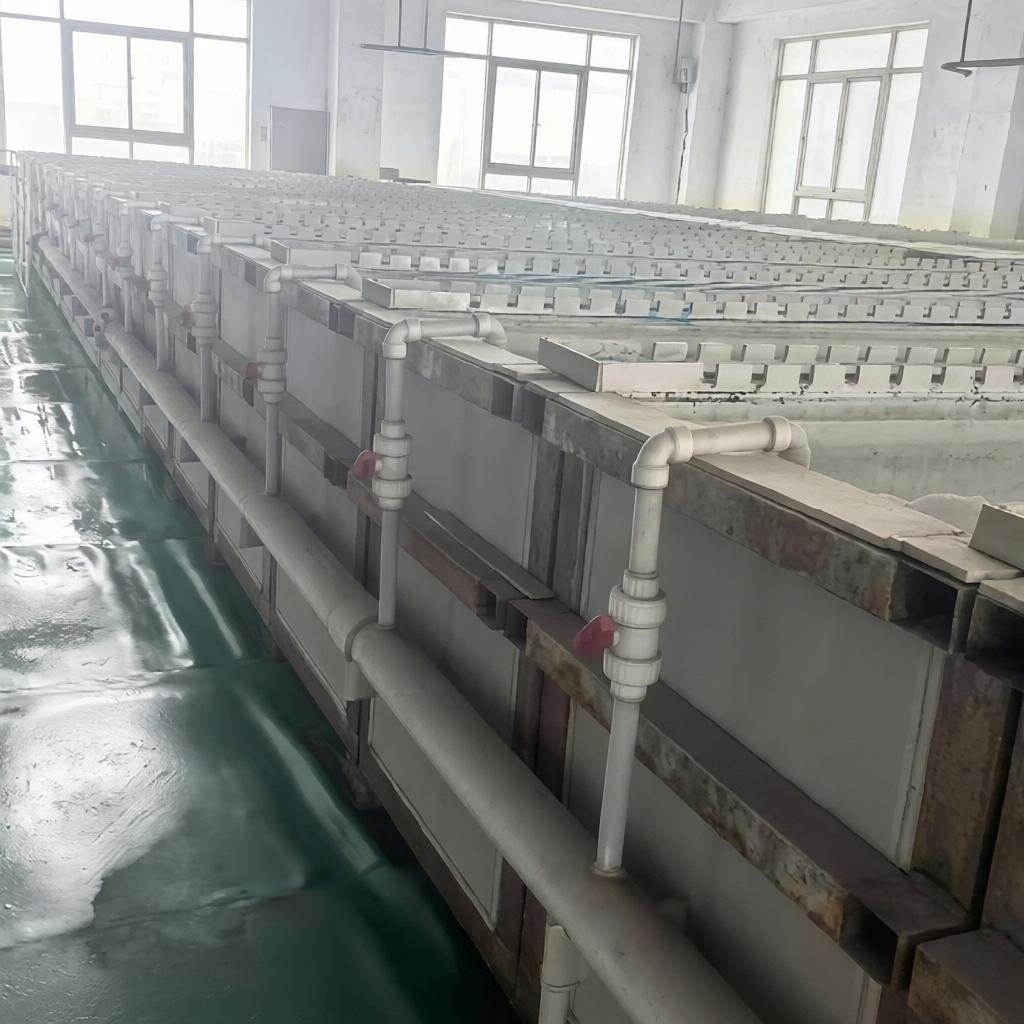
Electrolyte flow control: Employing a bottom-in/top-out flow pattern or directional circulation directs the settling anode slime away from the cathode.
Periodic tank cleaning: Halting operations at set intervals to remove accumulated anode slime from the tank bottom prevents it from becoming resuspended.
Liquid level control: Maintaining a stable electrolyte level prevents anode slime from drifting due to surface fluctuations.
Cathode protection: Inspecting cathode plate surfaces for scratches or oil stains prior to immersion minimizes the inclusion of impurities in the antimony deposit.
In summary, effective prevention of cathode antimony contamination by anode slime—thereby ensuring product purity and the stable operation of the electrolysis process—requires coordinated control across multiple aspects of the antimony electrolysis equipment, including diaphragm isolation, flow field optimization, regular cell cleaning, liquid level stabilization, and cathode plate pretreatment.