



NEWS&EVENTS
Home > News&Events > Company news > What is the importance of rectifier units in electrolytic copper production?
In electrolytic copper production, the rectifier unit performs the critical task of converting alternating current (AC) into low-voltage, high-current direct current (DC), serving as the source of stable DC power for the electrolytic cells; its importance is evident in several key areas.
First, the rectifier unit directly determines the output of electrolytic copper. The electrolytic deposition process follows Faraday's laws, meaning the amount of copper deposited is directly proportional to current intensity and duration. Rectifier units must continuously supply DC currents ranging from several thousand to tens of thousands of amperes; any shutdown or reduction in load halts production in the electrolytic cells, resulting in output losses that are difficult to recover later.
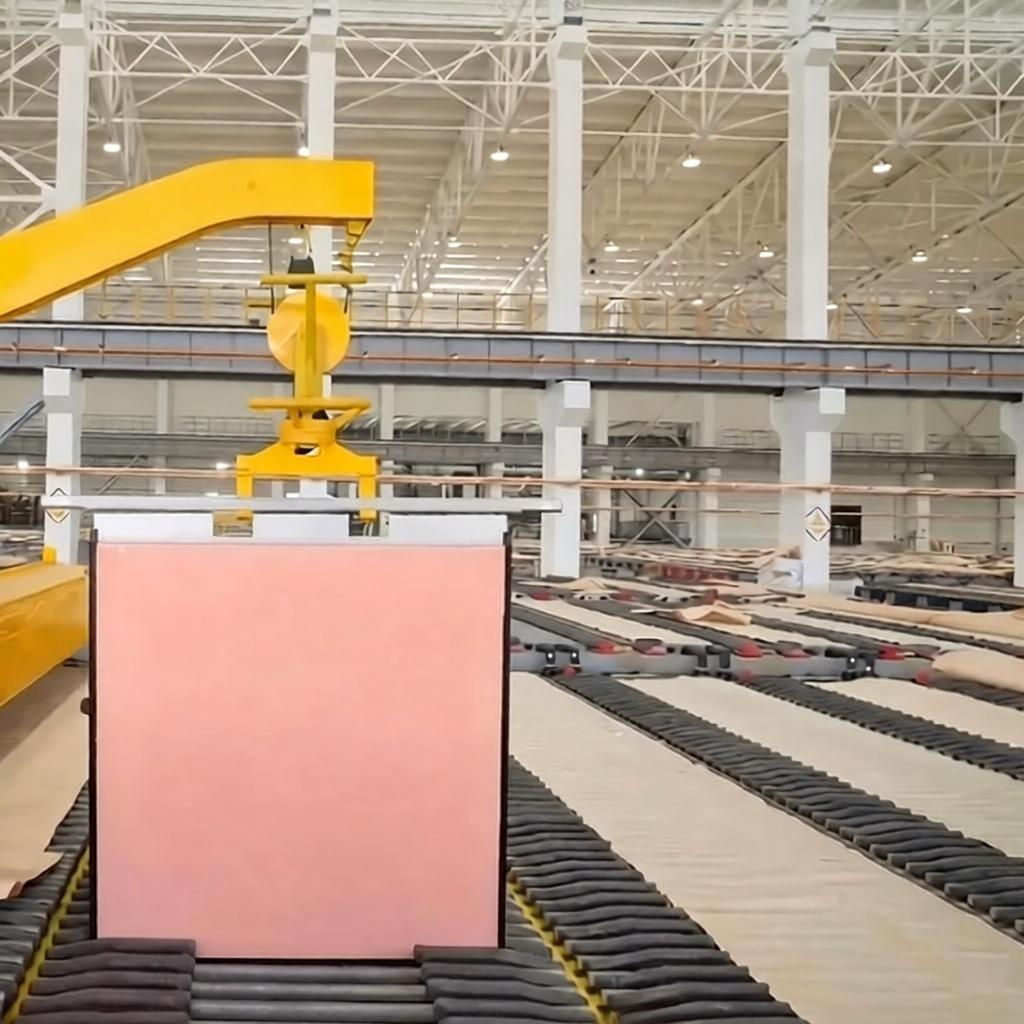
Second, the stability of the rectifier unit directly affects the quality of the electrolytic copper. Electrolysis is highly sensitive to current fluctuations; erratic current density can lead to rough crystallization, nodules, or even lamination in the cathode copper, thereby reducing the product pass rate. High-precision rectifier units can minimize current fluctuations, ensuring uniform copper ion deposition and yielding dense, smooth, high-purity cathode copper.
Third, the reliability of the rectifier unit is crucial to the safety and economic efficiency of the entire production system. Modern copper electrolysis facilities typically employ thyristor-based rectifiers equipped with automatic current stabilization and fault protection systems; these allow for rapid adjustments in response to grid fluctuations or load changes, preventing equipment damage or safety incidents caused by overcurrent or overheating. A rectifier unit failure not only halts production but can also damage electrolytic cells and electrodes due to sudden current surges.
Furthermore, the efficiency of the rectifier unit directly impacts the electricity consumption per ton of copper produced. High-efficiency rectifier units reduce internal energy losses and improve electrical energy utilization—a factor of great significance for energy conservation in the power-intensive electrolytic copper industry.
In summary, the rectifier unit acts as the "heart" of electrolytic copper production; its reliable, stable, and efficient operation forms the foundation for ensuring output, quality, safety, and profitability.