



NEWS&EVENTS
Home > News&Events > Company news > From Crude Antimony to Antimony Ingots: Downstream Process After the Rotary Furnace
Crude antimony produced by a rotary furnace cannot be used directly as a final product and must undergo refining. Specifically, crude antimony and a refining agent are charged together into a refining furnace. The refining agent removes impurities from the crude antimony, yielding purified antimony liquid. This step is critical for converting crude antimony into qualified antimony ingots and directly determines the purity and quality of the final product.
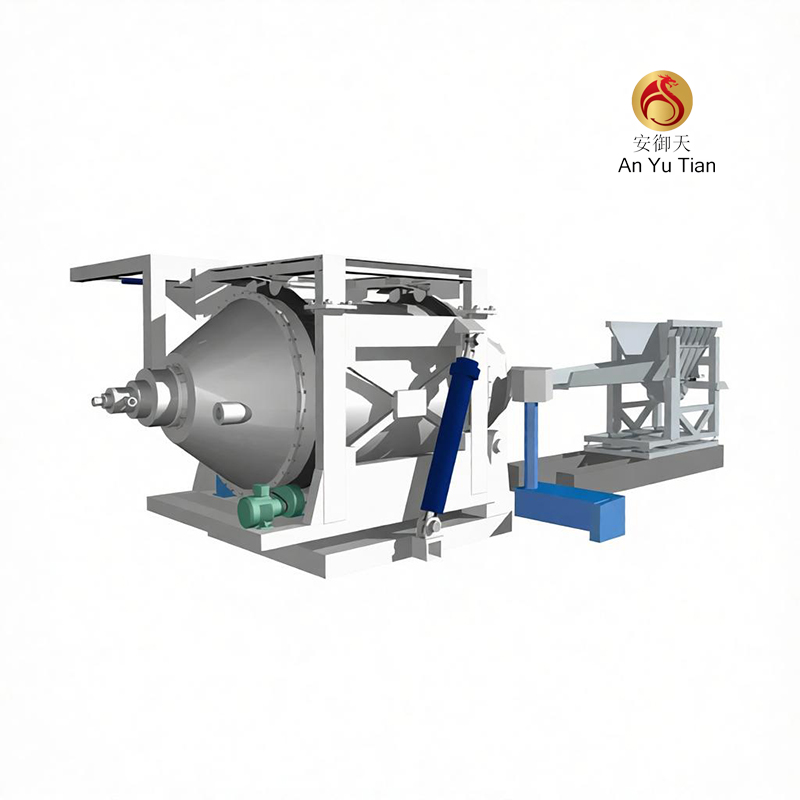
After refining is complete, the purified antimony liquid enters a continuous casting machine for continuous casting. The antimony liquid cools and solidifies in the casting machine to form hot antimony ingots. The continuous casting process ensures continuity and dimensional consistency of the ingots, laying the foundation for subsequent automated packaging operations.
After the hot antimony ingots are formed, a robotic stacking machine automatically grabs, stacks, and bundles them to complete finished product packaging. This automated step reduces manual intervention, improves packaging efficiency and product appearance quality, and ultimately produces antimony ingots ready for shipment and sale.
In summary, from crude antimony produced by the rotary furnace to the final antimony ingot product, the downstream process mainly consists of three core stages: refining in a refining furnace, forming in a continuous casting machine, and automatic grabbing, stacking, and bundling by a robotic stacking machine followed by finished product packaging. The entire process is coherent and efficient, balancing product quality with a high level of packaging automation.