



NEWS&EVENTS
Home > News&Events > Company news > Process conditions for desulfurization of antimony ore by rotary kiln roasting.
In rotary kiln roasting of antimony ore, controlling a specific temperature is crucial for desulfurization, as this temperature promotes the oxidative decomposition of sulfides. However, temperature alone is insufficient; other process conditions must be optimized to improve the reaction and enhance desulfurization efficiency.
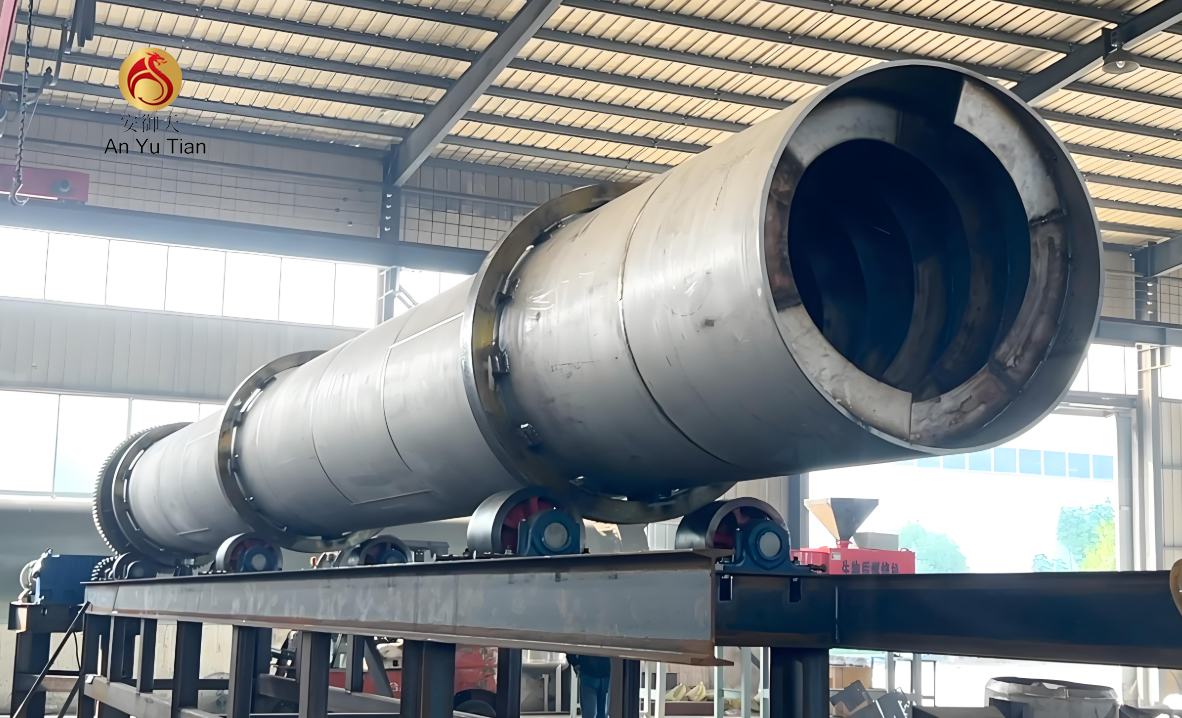
Firstly, roasting time is critical. Insufficient time leads to incomplete reaction and high residual sulfur content; excessive time results in over-oxidation, wasting energy and affecting antimony recovery rate. In actual production, the time should be adjusted based on the sulfur content of the ore, mineral composition, and kiln rotation speed. The optimal range is usually determined through experimentation, such as extending the time to several hours for high-sulfur antimony ore.
Secondly, ventilation conditions affect desulfurization efficiency. The rotary kiln requires good ventilation to ensure oxygen supply and timely removal of sulfur oxides. Poor ventilation reduces desulfurization efficiency and corrodes equipment. In practice, the air volume of the induced draft fan is often adjusted to maintain a slight negative pressure, combined with a flue gas treatment system to meet emission standards.
Thirdly, ore particle size has a significant impact. Too large a particle size leads to incomplete reaction; too fine a particle size increases the processing load and clogs the voids. Pre-treatment should crush the ore to 1-10 millimeters to balance the reaction surface area and fluid dynamics.
In summary, in rotary kiln roasting of antimony ore, in addition to temperature control, precise adjustment of roasting time, ventilation, and particle size is necessary. These factors are interrelated, and dynamic optimization is required in actual operation to achieve efficient, energy-saving, and environmentally friendly desulfurization, improving the quality and recovery rate of antimony products.