



NEWS&EVENTS
Home > News&Events > Company news > Stable desulfurization in rotary kilns is key to the efficient smelting of antimony ore.
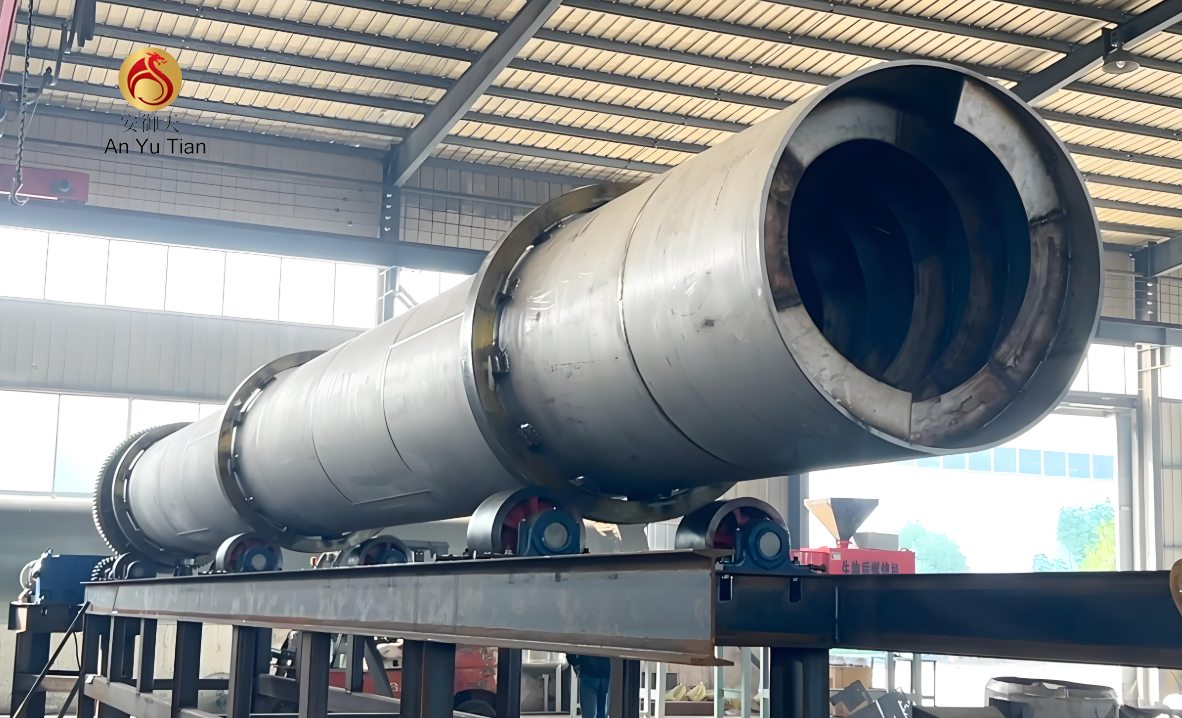
In antimony smelting, rotary kiln roasting is a crucial pretreatment step. Its core function is to achieve efficient desulfurization of the ore through oxidative roasting, providing qualified antimony oxide powder for subsequent reduction smelting. Stable desulfurization is the primary guarantee for efficient smelting, requiring three key technical supports: temperature uniformity control, anti-clogging design, and optimization of the thermal coupling interface with the rotary furnace.
1. Temperature uniformity control is the cornerstone of efficient desulfurization.
Antimony sulfide can only be fully oxidized at 850-1000℃. Too low a temperature results in incomplete desulfurization, while too high a temperature causes material overheating or local melting, affecting mass transfer and airflow distribution within the kiln. Modern rotary kilns utilize a multi-stage adjustable combustion system, an in-kiln temperature measurement network, and an intelligent control system to dynamically adjust heating, ensuring that the material experiences a stable and uniform temperature field within the kiln, thus ensuring a complete and stable desulfurization reaction.
2. Anti-clogging design ensures long-term stable operation of the kiln.
Clumping is a common fault in rotary kilns, caused by low-melting-point impurities or temperature fluctuations, and can lead to kiln blockage and production stoppage in severe cases. Based on the characteristics of antimony ore, the kiln body is lined with special refractory materials, and the kiln body's length-to-diameter ratio and rotation speed are optimized to ensure material tumbling and scattering, preventing powder adhesion. Simultaneously, precise air distribution and temperature control reduce local overheating and inhibit clumping.
3. Optimization of the thermal coupling interface with the rotary furnace improves system energy efficiency.
The high-temperature flue gas and calcined ore produced by the rotary kiln contain a large amount of waste heat. Integrating this with the subsequent rotary furnace allows for stepped utilization of thermal energy, such as preheating combustion air with high-temperature flue gas and hot charging and conveying of calcined ore to reduce reheating energy consumption. This reduces overall energy consumption and improves process coordination and product quality consistency.
In summary, modern antimony ore roasting rotary kilns have become intelligent and integrated key units, laying the foundation for "efficient, low-consumption, and continuous" production in antimony smelting, embodying the core value of "stable desulfurization as the first guarantee."