



NEWS&EVENTS
Home > News&Events > Company news > Overview of the Scrap Copper Smelting Process Using Tilting Furnaces
The tilting furnace serves as the core equipment in the smelting stage of scrap copper recycling; its high-temperature smelting process offers significant advantages, including high efficiency, precise temperature control, and reduced energy consumption.
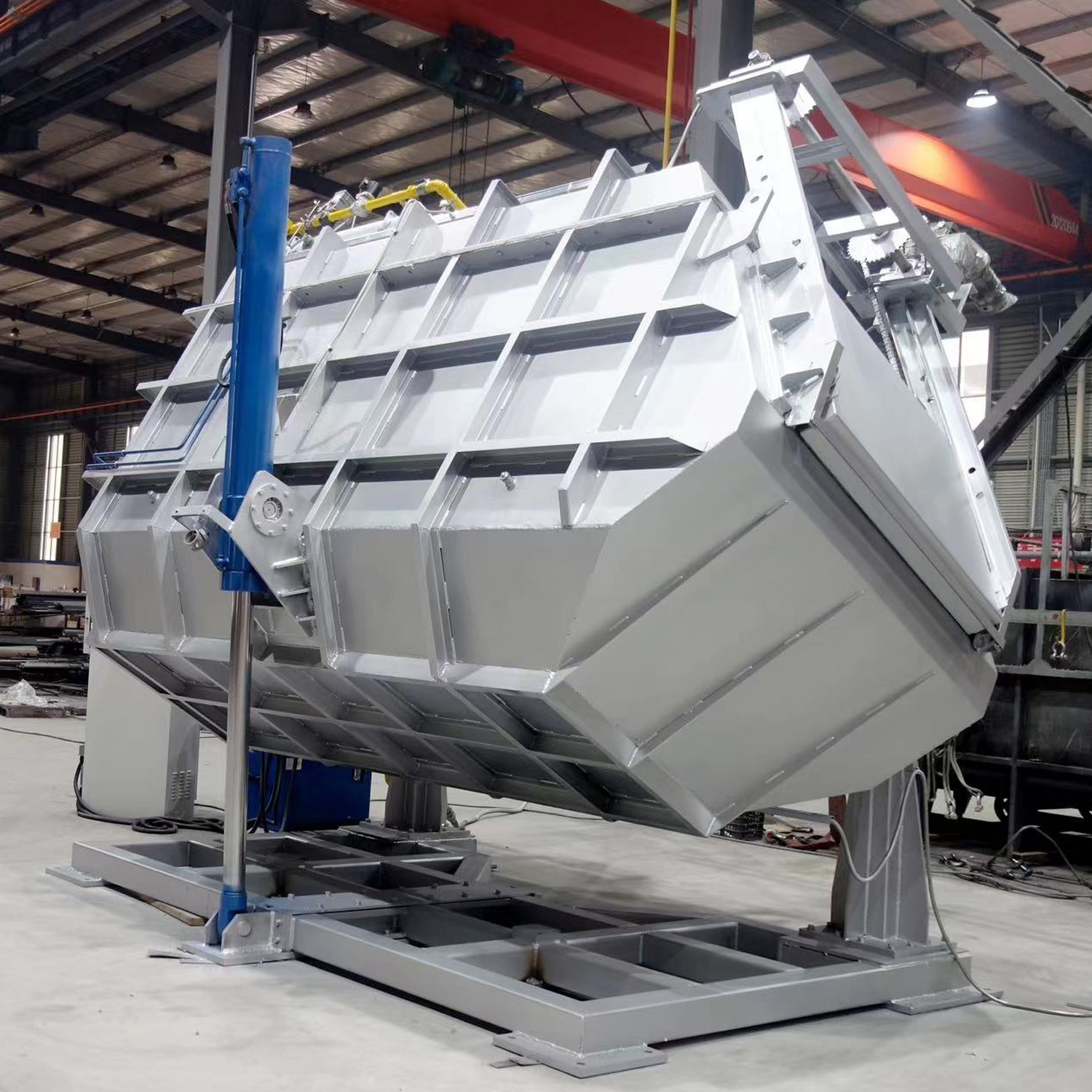
1. Smelting Process
Operating Temperature: Exceeding 1000°C, the process converts solid scrap copper into a molten state.
Equipment Advantages: The tilting furnace features high heating efficiency and superior temperature control precision, enabling it to significantly minimize energy waste while maintaining a stable melt temperature.
2. Impurity Removal
Slag Skimming: Once the copper has melted, impurities—such as oxides—float to the surface to form slag, which is subsequently removed through a skimming operation.
Gaseous Volatilization: Other contaminants volatilize under high-temperature conditions and are discharged in gaseous form.
3. Purification and Forming
Initial Casting: The purified copper can be directly cast into various shapes, such as ingots or rods.
Preparation for Electrolytic Refining: Typically, the copper is first cast into anode plates for use in the subsequent electrolytic refining process.
Quality Control: Rapid cooling techniques are employed to accelerate solidification and prevent compromising the structural integrity of the copper. This process ultimately yields copper with a purity level reaching 99.9%, possessing electrical conductivity and ductility comparable to that of newly mined copper.
4. Environmental and Resource Benefits
Significant Energy Savings: Smelting scrap copper consumes substantially less energy compared to the mining and processing of virgin copper ore.
Emission Reduction and Decarbonization: The process significantly reduces greenhouse gas emissions and lowers the carbon footprint.
Resource Conservation: It effectively preserves finite copper reserves and promotes sustainable resource utilization.
In summary, smelting scrap copper in a tilting furnace is a highly efficient, environmentally friendly, and resource-conserving technology. While ensuring the production of high-purity copper, it delivers substantial economic and environmental benefits to the copper recycling industry.