



NEWS&EVENTS
Home > News&Events > Company news > Working Principle and Structure of the Tilting Crucible Copper Melting Furnace
A tilting crucible copper melting furnace is a type of smelting equipment designed to safely and efficiently pour out molten copper by tilting the furnace body using hydraulic or mechanical mechanisms. Widely utilized in the smelting of copper and copper alloys, its core design centers on a tiltable furnace body, which primarily consists of the following components:
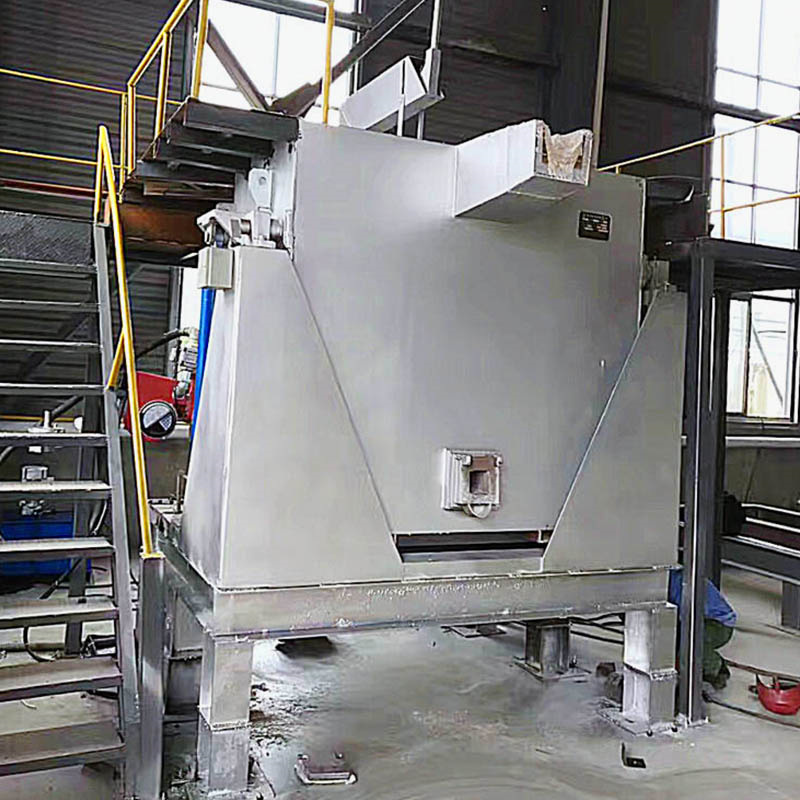
1. Furnace Body and Crucible: The interior of the furnace body houses a crucible used to contain the copper charge. Common crucible materials include graphite—known for its excellent thermal conductivity and long service life—as well as sillimanite or water-cooled copper crucibles, which are typically used for high-purity smelting applications.
2. Tilting Mechanism: This is the critical component responsible for executing the "tilting" function. Typically driven by a hydraulic power unit, hydraulic cylinders, or a motor-driven reduction gear system, it enables the furnace body to rotate around a pivot axis. The maximum tilting angle can reach 90° to 100°, allowing for the near-complete discharge of the molten copper from the furnace.
3. Heating System: Depending on specific requirements, various heating methods are available:
Gas-fired: Utilizes fuels such as natural gas or LPG; offers lower operating costs and is suitable for large-scale production.
Electric Heating: Subdivided into resistance heating (using heating wires or silicon carbide rods) and induction heating (using medium- or high-frequency power supplies). Induction heating offers rapid heating speeds and generates an electromagnetic stirring effect, which helps ensure greater uniformity in alloy composition.
4. Control System: Equipped with a PLC or intelligent temperature controller, the system enables automated temperature control, over-temperature alarms, molten metal leakage alarms, and other functions; temperature control accuracy typically reaches ±5°C.
We hope this information helps you gain a better understanding of tilting crucible copper melting furnaces. If you have specific application scenarios or production volume requirements, please feel free to leave a comment or inquiry.