



NEWS&EVENTS
Home > News&Events > Company news > Selection and Usage Recommendations for Tilting Crucible Copper Melting Furnaces
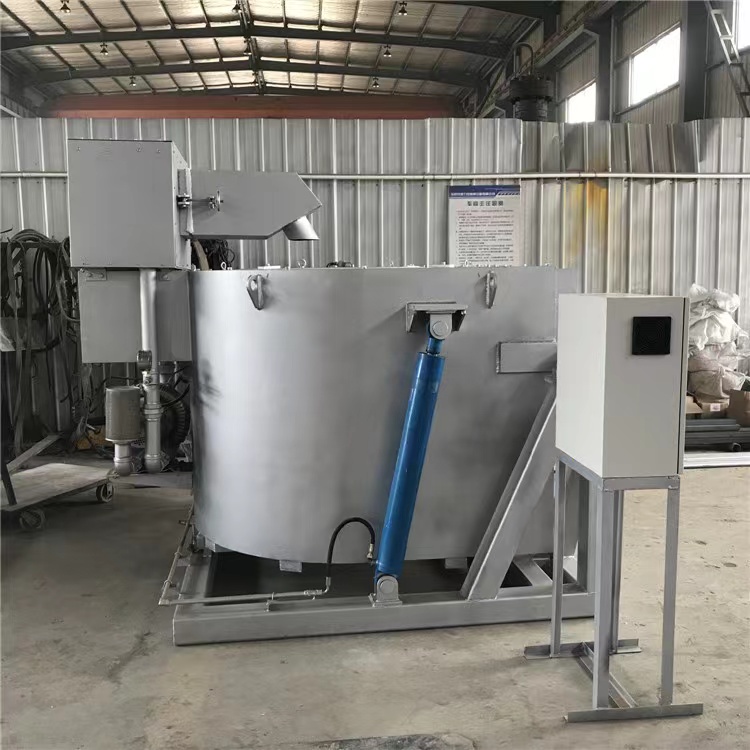
The tilting crucible copper melting furnace is a critical piece of equipment in the copper and copper alloy melting and casting process; its selection and usage directly impact production efficiency, product quality, and operational safety. Regarding the procurement and operation of this equipment, the following systematic recommendations are offered across three key areas: selection criteria, safety configurations, and crucible materials.
I. Precise Selection Based on Output and Process Requirements
The primary basis for equipment selection is the scale of production and the continuity of operations.
Large-scale Continuous Production: If daily output is high and melting batches are frequent, a gas-fired tilting furnace is the more economical choice. The unit cost of natural gas is typically lower than industrial electricity rates, and gas furnaces demonstrate distinct advantages in thermal efficiency during high-capacity melting, thereby significantly reducing long-term operating costs.
Small-batch Production or R&D Experiments: For scenarios involving a wide variety of products and small batch sizes per melt, a medium-frequency induction electric furnace is more suitable. It features rapid heating rates, low melting loss, and precise temperature control capabilities, offering exceptional operational flexibility.
II. Upholding Non-Negotiable Safety Standards
Copper melting temperatures often exceed 1100°C, and molten copper exhibits extremely high fluidity; therefore, safety precautions can never be compromised.
Leakage Alarms: The equipment must be fitted with leakage detection devices. Should a breach in the furnace lining or a leak of molten copper be detected, an immediate alarm must sound, and the heating source must be automatically cut off to prevent safety incidents.
Over-temperature and Process Protection: Over-temperature cutoff protection must be configured to prevent the crucible from overheating and collapsing due to temperature control system failure.
Specific Protections for Electric Furnaces: If an induction electric furnace is selected, it is imperative to verify that the equipment includes phase-loss protection (to prevent the burnout of electrical components) and water-loss protection (automatic shutdown in the event of anomalies in the induction coil's cooling water supply); these features constitute the lifeline for the safe operation of electric furnaces.
III. Judicious Selection of Crucible Materials
Graphite Crucibles: Suitable for melting high-purity oxygen-free copper or copper alloys that are sensitive to impurities, as they prevent contamination. When using graphite crucibles, strict adherence to the furnace drying (curing) procedure is mandatory; under no circumstances should a cold furnace be heated directly to high temperatures.
Water-cooled Copper Crucibles: Primarily utilized for high-end melting applications conducted under vacuum or special atmospheric conditions. These crucibles fundamentally eliminate the risk of contamination to the molten copper from the crucible material itself, though the initial cost of such equipment is relatively higher. Summary and Recommendations: When making a purchase, priority should be given to assessing the completeness of the equipment's safety interlock system, as this directly impacts production safety. Building upon this foundation, the energy source should be determined based on the scale of production output; subsequently, the appropriate configuration for a tilting crucible copper melting furnace should be selected in accordance with the required product purity standards. Only by following this approach can efficient, safe, and high-quality copper melting operations be successfully achieved.