



NEWS&EVENTS
Home > News&Events > Company news > Antimony Rotary Furnace: From Ore to Antimony Ingots or Antimony Trioxide
Throughout the entire antimony smelting process, the antimony rotary furnace serves as a pivotal piece of equipment, bridging the upstream and downstream stages. Its function is integral to the entire production chain—from raw antimony ore to the final output of antimony ingots or antimony trioxide.
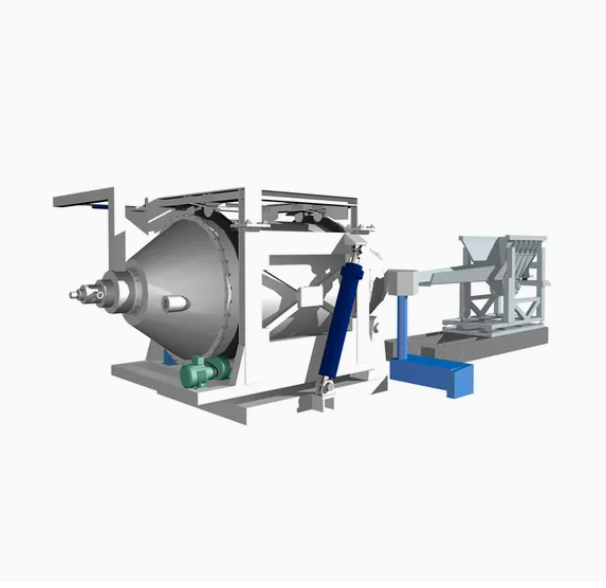
Raw ore is fed into a rotary kiln via a belt conveyor, where it undergoes desulfurization roasting at temperatures ranging from 800°C to 900°C. The desulfurized ore powder is then precisely fed by a feeder into the antimony rotary furnace, where it undergoes high-temperature reductive smelting to produce crude antimony metal. Furthermore, the antimony rotary furnace simultaneously supplies thermal energy to the rotary kiln, thereby facilitating energy recycling and significantly reducing overall energy consumption.
The high-temperature flue gas generated during smelting first enters an annular flue for cooling. It then passes through a dust collector to recover trace amounts of valuable antimony trioxide, before finally entering a desulfurization tower to complete the purification process, thereby ensuring full compliance with environmental standards.
Once the crude antimony is produced, the subsequent processing path depends on the desired final product: If antimony ingots are required, the molten metal is transferred to a refining furnace for purification, then shaped via a continuous casting machine, and finally automatically stacked, bundled, and packaged by robotic manipulators. If antimony trioxide is the target product, the molten antimony is oxidized within an oxidation furnace; the resulting volatile antimony oxide is then collected as high-purity powder by a dust collection system.
The antimony rotary furnace integrates high-temperature reduction, waste heat recovery, valuable material reclamation, and environmental synergy into a single system, making it ideally suited for dual-product production lines. Choosing this technology means embracing a future of highly efficient, energy-saving, and eco-friendly antimony smelting.