



NEWS&EVENTS
Home > News&Events > Company news > The Rotary Furnace: The Core Equipment of the Antimony Production Line
From raw antimony ore to high-purity antimony ingots or antimony trioxide, the antimony rotary furnace serves as the central pillar of the entire production line, playing a pivotal role throughout the entire process. It not only performs a critical function in high-temperature reductive smelting but also undertakes the vital task of supplying heat to the roasting rotary kiln, thereby facilitating energy recycling and significantly reducing overall energy consumption.
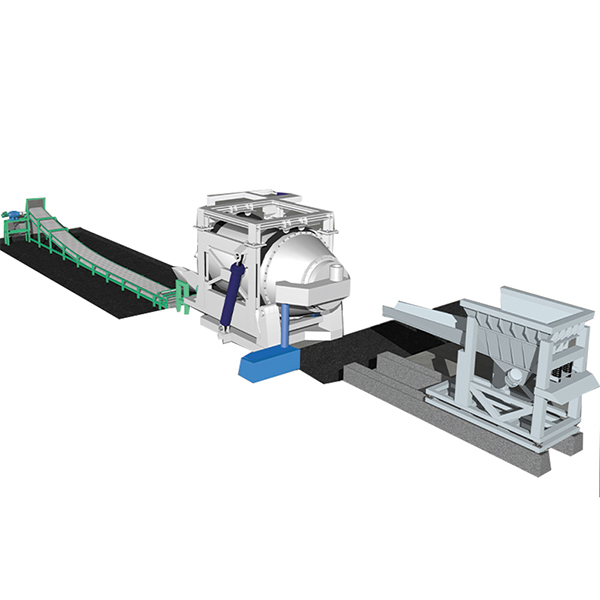
Seamless Process Integration: Dual Functionality in a Single Furnace
Antimony ore is fed into the rotary kiln via a belt conveyor, where it undergoes desulfurization roasting at temperatures ranging from 800°C to 900°C. The roasted ore powder is then precisely fed by a feeder into the antimony rotary furnace, where, within a high-temperature environment, it undergoes reduction to yield crude antimony metal. Simultaneously, the high-temperature flue gas generated during the smelting process is channeled into the rotary kiln to serve as a heat source, establishing a waste-heat recycling loop that substantially boosts the thermal efficiency of the entire production workflow.
Clean Production: Dual Recovery of Valuable Resources
The high-temperature flue gas discharged from the antimony rotary furnace is first cooled within an annular flue before entering a dust removal system. The trace amounts of antimony trioxide entrained within the flue gas are effectively recovered—transforming waste into valuable resources—while the purified flue gas subsequently enters a desulfurization tower to ensure emissions meet regulatory standards. This eco-friendly, closed-loop design renders the smelting process greener and fully compliant with environmental regulations.
Flexible Product Diversification: Uncompromising Quality
The crude antimony can undergo further refining: by adding refining agents, it is transformed into pure molten antimony, which is then cast into shape via a continuous casting machine and automatically stacked and bundled into ingots by robotic manipulators; alternatively, the molten antimony can be volatilized within an oxidation furnace, allowing for the collection of high-purity antimony trioxide powder via the dust removal system. Whether your requirements call for metallic antimony ingots or flame-retardant-grade antimony oxide, a production line centered around the antimony rotary furnace ensures consistent, reliable output.
Choosing the antimony rotary furnace means choosing an antimony smelting solution that is highly efficient, energy-saving, and environmentally responsible.