



NEWS&EVENTS
Flue gas generated during antimony smelting contains high concentrations of pollutants such as dust and sulfur dioxide; it must be purified by environmental protection equipment before discharge. Modern antimony smelters typically feature two main components: a dust collection system and a desulfurization system.
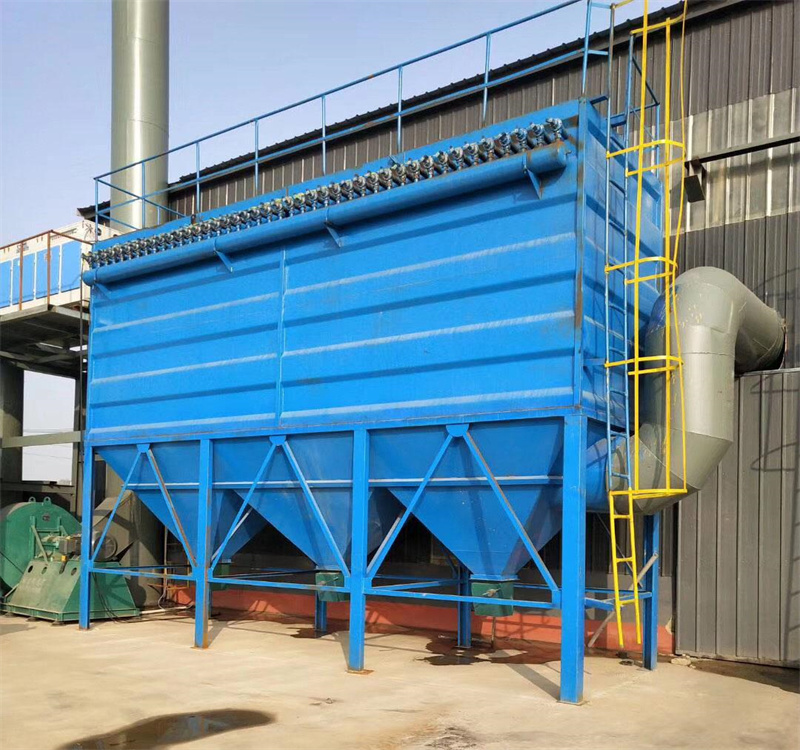
Dust Collection System:
1. Cyclone dust collector: Composed of an inlet pipe, a cylindrical body, a conical section, an exhaust pipe, and a dust hopper. The body is cylindrical, connected at the bottom to a conical section, with the exhaust pipe located at the center of the top. Dust-laden flue gas enters the cylindrical body tangentially, creating a rotating airflow.
2. Baghouse dust collector: Composed of an upper housing (clean air chamber), a middle housing (filtration chamber), a lower housing (dust hopper), filter bags, bag cages, a pulse-jet cleaning system, and inlet/outlet ducts. Filter bags are suspended within the middle housing and supported internally by cages. Dust-laden gas enters the filtration chamber; dust is trapped on the outer surface of the filter bags, while clean gas passes through the bags into the upper housing for discharge.
Desulfurization System:
The desulfurization tower utilizes a wet spray, open-tower design. Its main structure is a vertical cylinder featuring, from bottom to top: a slurry tank, a flue gas inlet, spray layers, a mist eliminator, and a flue gas outlet. Ancillary equipment located outside the tower includes circulation slurry pumps, oxidation blowers, and a gypsum discharge system. Flue gas enters the lower-middle section of the tower and comes into counter-current contact with limestone slurry sprayed from above; a mist eliminator at the top of the tower separates entrained liquid droplets.
The coordinated operation of the dust collection and desulfurization systems ensures that antimony smelting flue gas meets discharge standards.