



NEWS&EVENTS
Home > News&Events > Company news > The Importance of Flow Rate in Individual Cells During the Electrolytic Copper Process
In copper electrolytic refining, the circulation flow rate within an individual cell is a critical process parameter; the optimal rate depends on factors such as the electrolyte feed method, current density, and electrolytic cell volume, and it directly impacts cathode copper quality and production efficiency.
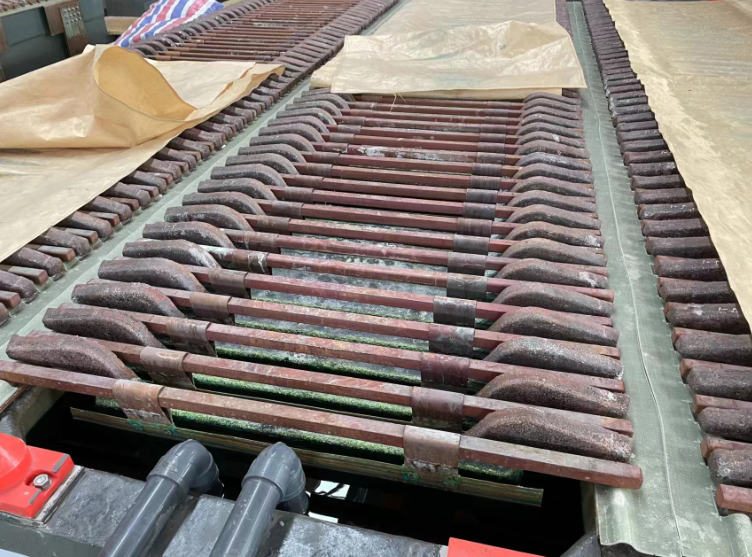
A high circulation flow rate helps eliminate copper ion concentration gradients near the anode and cathode plates, while raising the electrolyte temperature can also mitigate concentration polarization to some extent—potentially allowing for a slight reduction in the circulation rate if the temperature is sufficiently high.
However, a higher circulation rate is not necessarily better. Excessive flow creates a significant issue: difficulty in anode slime sedimentation. Anode slime consists of fine solid particles that detach from the anode during electrolysis; if the flow velocity is too high, these particles remain suspended in the electrolyte rather than settling at the bottom of the cell. They may instead adhere to the cathode surface, compromising product quality. Therefore, the upper limit of the circulation rate must be determined by the need to maintain electrolyte clarity and ensure effective anode slime sedimentation.
In actual production, process engineers must strike an optimal balance between mitigating concentration polarization and ensuring proper anode slime sedimentation. Simultaneously, rigorous daily inspections are essential to monitor the operating status of each cell, enabling the timely detection and resolution of issues such as flow anomalies, blockages, or leaks, and preventing incidents like "dead cells" (electrolyte stagnation due to circulation interruption) or "overflows" (spillage caused by excessive flow or outlet blockages).
In summary, controlling the circulation flow rate in copper electrolysis is a delicate balancing act; only through site-specific strategies and dynamic adjustments can the goals of high-quality, efficient, and stable production be achieved.