



NEWS&EVENTS
Home > News&Events > Company news > Copper Electrolysis Equipment: Core Equipment and Technology for Hydrometallurgical Copper Refining
Copper electrolysis equipment serves as the core production unit in the hydrometallurgical copper refining process. Its design centers on electrolytic cells, electrode systems, electrolyte circulation, and power supply and control systems, all aimed at achieving the efficient and stable production of high-purity copper cathodes.
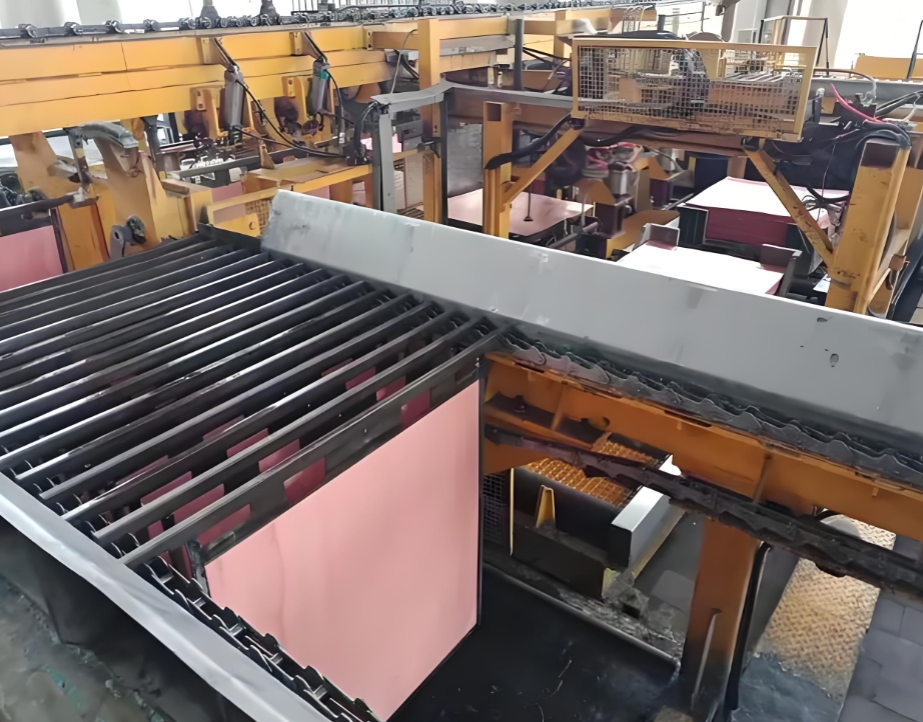
The electrolytic cell acts as the primary vessel and is typically constructed from reinforced concrete lined with fiberglass-reinforced plastic (FRP) or made entirely of vinyl ester resin to withstand the long-term corrosive effects of the acidic electrolyte. The cell bottom is designed with a slope to facilitate the collection of anode slime generated during electrolysis, thereby simplifying the subsequent recovery of precious metals. The electrode system comprises anodes and cathodes: the anode consists of a blister copper plate awaiting purification, which dissolves into copper ions under the influence of direct current (DC). While pure copper starter sheets were traditionally used for cathodes, modern advanced processes widely employ permanent stainless steel cathodes; these feature smooth surfaces, require no frequent replacement, and yield high-quality copper cathodes that are easily stripped, thereby significantly enhancing production efficiency and automation levels.
The electrolyte circulation system utilizes equipment such as circulation pumps and head tanks to maintain the uniformity and stability of the electrolyte's temperature, concentration, and flow dynamics. The application of advanced circulation technologies—such as bidirectional parallel flow—helps eliminate concentration polarization and supports operations at high current densities. The power supply and control system provides continuously adjustable DC power and employs intelligent sensing technology to monitor parameters like copper ion concentration and temperature in real time, automatically adjusting electrode spacing to ensure the electrolysis process consistently operates under optimal conditions.
The operational principle is based on electrochemical reactions: the blister copper anode dissolves, and copper ions deposit onto the cathode to form pure copper, while precious metals such as gold and silver precipitate as anode slime, facilitating comprehensive recovery. As the core equipment in hydrometallurgical copper refining, copper electrolysis systems are continuously integrating intelligent control and environmental protection technologies, evolving toward high current density, clean, and efficient operations.