



NEWS&EVENTS
Home > News&Events > Company news > Key Safety Operating Points for Rotary Anode Furnaces Processing Scrap Copper
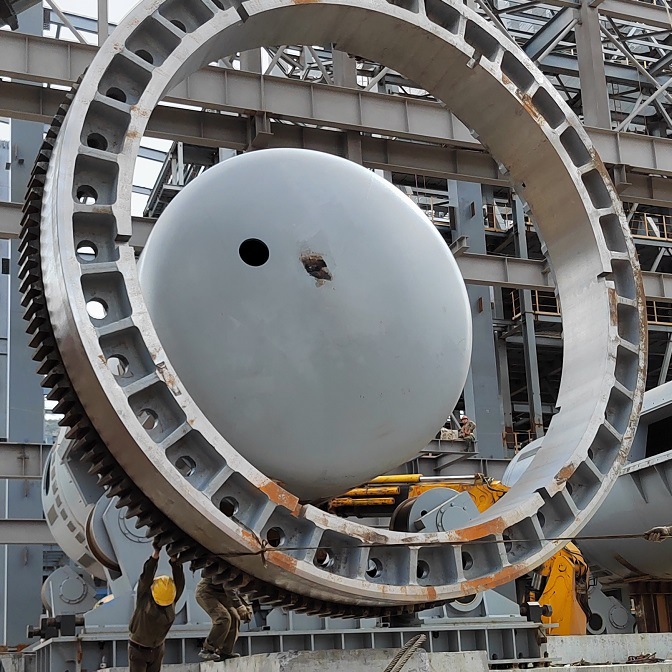
The rotary anode furnace (also known as a rotary refining furnace) is a critical piece of equipment for processing copper scrap in modern, large-scale copper smelters. Its operational cycle comprises four stages: charging, oxidation, reduction, and casting. Given that the temperature of the molten copper inside the furnace can reach 1,450°C, safe operation is paramount.
I. Precise Rotation Control
The drive system of the rotary anode furnace must support both high and low rotational speeds. Process requirements dictate high-speed rotation during charging, oxidation, slag removal, and reduction to enhance operational efficiency, while low-speed rotation is mandatory during casting to prevent loss of control. The furnace's tilt angle is precisely regulated via a master controller and a rotary encoder. An emergency tilt test must be conducted during every shift handover to verify that the furnace can automatically tilt to a safe position; furthermore, before initiating any furnace rotation, operators must ensure that the movement will not cause injury to personnel or damage to equipment.
II. Emergency Safety Mechanism (Mandatory Requirement)
The rotary anode furnace must be equipped with a system that automatically rotates the furnace body to a safe position during an emergency stop, supported by a dual power supply or a DC backup power system. In the event of a sudden power failure, the furnace must automatically perform an emergency tilt to a safe position, thereby lifting the oxidation and reduction tuyères above the melt surface or halting the flow of copper from the taphole. This mechanism is critical; should molten blister copper spill over, it would incinerate electrical components and equipment in its path and could potentially trigger fires, resulting in casualties.
III. Additional Safety Measures
Continuous water supply to the furnace's cooling elements must be maintained throughout the smelting process without interruption, and water pressure must remain stable. Operators are required to wear appropriate personal protective equipment (PPE) and strictly adhere to standardized operating procedures. Before charging begins, it must be verified that there are no personnel or equipment hazards in the safety pit or the area surrounding the furnace.