



NEWS&EVENTS
The operational process for electrolytic copper equipment primarily consists of two main stages: electrolytic refining and electrolyte circulation/purification; the entire workflow relies on an automated control system to ensure continuous, stable production.
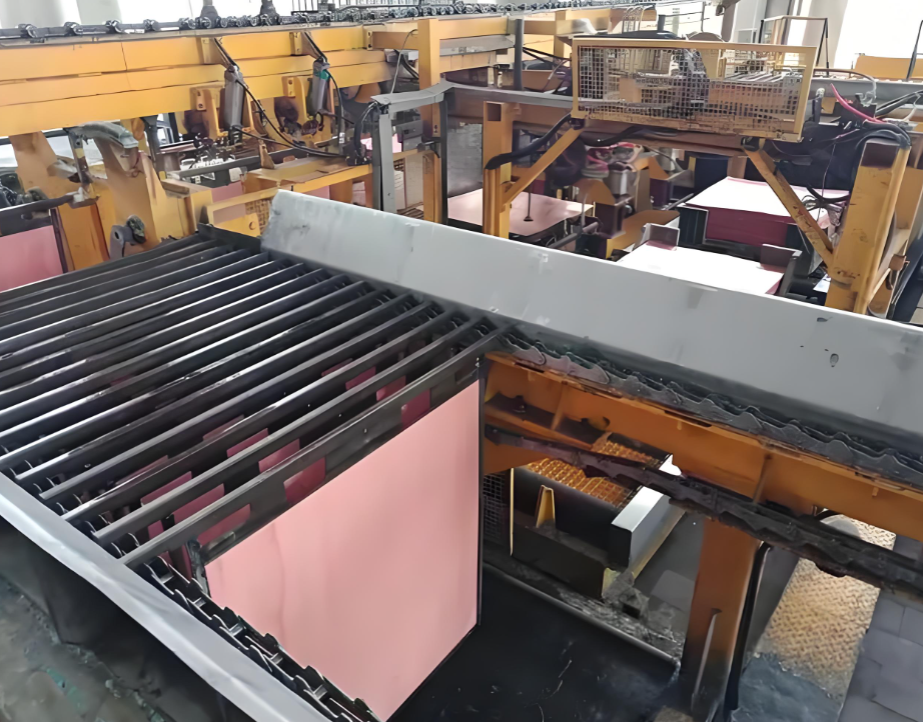
Cell Loading: Anodes and cathodes, having been aligned by a spacing unit, are hoisted into the electrolytic cells by a specialized multi-functional crane. Positioning accuracy is controlled to within ±10 mm to ensure uniform inter-electrode spacing.
Electrolysis: Blister copper anodes and pure copper starter sheets (or stainless steel plates) serve as the anode and cathode, respectively, with a mixed solution of copper sulfate and sulfuric acid acting as the electrolyte. Electrodes are arranged alternately in the cells at set intervals; upon the application of direct current, the anode copper dissolves into ions, and high-purity electrolytic copper deposits onto the cathode. The standard electrolysis cycle is 7 days, though high-current-density processes can reduce this to 5 days.
Cell Unloading: Once the electrolysis cycle concludes, the power is cut off, a short-circuiting procedure using conductive bars is performed, and an overhead crane hoists the copper cathodes out of the cells.
Stripping and Washing: Copper cathodes are transported to a stripping unit for separation and cleaning, while anode scraps are sent to a washing unit for recovery and recycling.
Electrolyte Circulation: The circulation system continuously regulates solution concentration and temperature. It employs a bidirectional parallel flow technology to ensure uniform flow velocity within the cells, thereby maintaining a stable electrolytic environment.
Control System: The entire operation is centrally controlled and monitored in real-time via PLC and touch-screen interfaces. This ensures the precise execution of process parameters, consistent product quality, and safe, efficient production.
As core equipment in copper smelting, the level of automation and intelligence in electrolytic copper systems directly determines an enterprise's production efficiency and economic performance, serving as an indispensable pillar of modern copper processing.