



NEWS&EVENTS
The antimony rotary furnace is a core piece of thermal processing equipment in the antimony smelting industry; thanks to its exceptional process adaptability, it offers significant advantages in comprehensive resource utilization and product diversification.
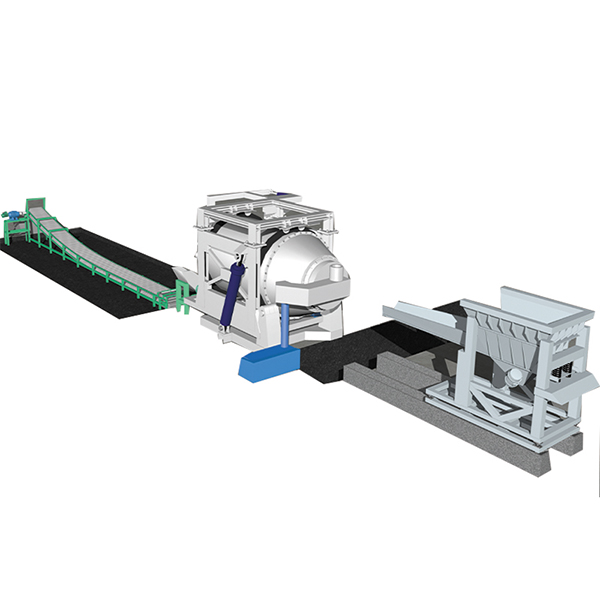
A primary characteristic of the antimony rotary furnace is its strong adaptability to raw materials. The equipment can process a wide range of feedstocks, including antimony sulfide ores, antimony oxide ores, mixed sulfide-oxide ores, and complex associated ores. For antimony sulfide ores—which account for over 70% of antimony resources—the furnace facilitates efficient volatilization by creating a sufficient oxidizing atmosphere; conversely, when processing antimony oxide ores, it achieves reductive separation through the precise regulation of a carbonaceous atmosphere. Even low-grade ores with antimony content below 5% can achieve volatilization rates of 80%–90%. Through customized furnace structures and the fine-tuning of process parameters, various complex raw materials can be processed stably and efficiently.
Flexible product output is another standout advantage. By adjusting process parameters, the furnace can produce either antimony metal ingots or high-value-added antimony trioxide (Sb₂O₃) flame retardants. Production of antimony ingots prioritizes temperature uniformity and the efficiency of slag-antimony separation, whereas the production of antimony trioxide focuses on controlling the temperature gradient and oxygen supply intensity during the oxidation-volatilization stage. This flexibility enables enterprises to rapidly shift their product focus in response to market demand.
Customized solutions are key to equipment selection. Deep customization is provided based on ore characteristics, production capacity, and environmental regulations. For low-grade ores, the furnace body can be lengthened and rotation speeds optimized to extend reaction time; multi-zone temperature control is designed according to the fuel type; and regarding environmental protection, high-efficiency dust collection and desulfurization systems are installed to ensure emissions meet compliance standards. Through modular design and intelligent control systems, the furnace enables efficient, low-carbon, and high-yield antimony smelting production.