



NEWS&EVENTS
Home > News&Events > Company news > What are the rotational speed requirements for process control in a rotary anode furnace?
The process control for rotary anode furnaces imposes specific requirements regarding rotation speed, governed by a core principle: rapid rotation is employed during non-casting stages to enhance efficiency, whereas slow rotation is mandatory during the casting stage to ensure safety and control precision.
The specific requirements for each stage are as follows:
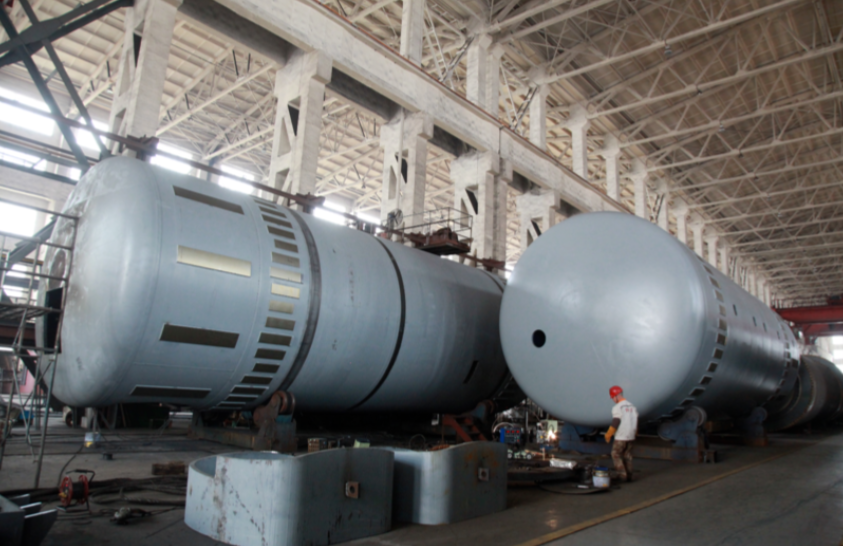
Charging, oxidation, slag removal, and reduction stages: Rapid rotation. Utilizing rapid rotation during these operational phases significantly boosts overall productivity. To achieve this, the equipment is typically equipped with a dedicated high-speed AC motor.
Casting stage: Slow rotation. Slow rotation is essential during casting to prevent the flow rate of molten copper from becoming excessive—which could lead to a loss of control—thereby ensuring both the quality of the anode plates and operational safety. This function is usually powered by a separate low-speed DC motor.
To accommodate these dual speed requirements, the drive system of the rotary anode furnace is designed with both high-speed and low-speed operating modes. Some advanced units even feature an emergency drive mode, designed to rotate the furnace body to a safe position during power outages or other critical situations.
Furthermore, the tilting angle of the furnace body requires precise control via a master controller and a rotary encoder. Precise low-speed control is particularly critical during the casting stage to ensure process quality.